Description
When you’re looking at commercial property in Egypt’s New Administrative Capital, you need to separate the actual fundamentals from the sales pitch. Grand Square Mall sits in the Financial and Business District, positioned deliberately near banks, government offices, and the planned international airport. Pyramids Developments, the company behind it, has French origins and a track record that includes work in both Paris and Cairo since 2000.
The mall covers 7,800 square meters and includes commercial shops, medical clinics, and administrative offices across eight floors. Administrative units start around EGP 2.2 million, commercial spaces from EGP 3.6 million, with payment plans stretching up to 10 years. The developer positions this as the first mixed-use commercial project in the New Capital approaching delivery, though timelines in emerging districts always carry uncertainty.
This breakdown covers the location advantages, unit configurations, pricing structure, and practical considerations that matter when you’re committing capital to a developing area.
Where Grand Square Mall Sits in the New Capital?
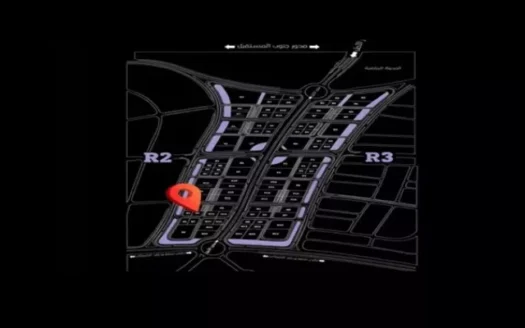
Grand Square Mall New Capital occupies a plot in the Financial and Business District, specifically in the banks and investment companies zone. This isn’t a residential neighborhood—it’s a planned commercial hub designed for financial institutions, corporate headquarters, and government agencies.
Grand Square Mall sits on a 100-meter-wide boulevard with four separate entrances across different street frontages. One entrance faces the Presidential Palace gardens, another overlooks a 75-meter street near the Parliament building and government district. These aren’t random proximities—they’re the result of zoning that clusters administrative and commercial functions together.
Access comes through the Bin Zayed Axis and the Ring Road, both major routes connecting the New Capital to Cairo and surrounding areas. The New Administrative Capital Airport sits approximately five minutes away by car, assuming completed infrastructure and normal traffic.
What’s Actually Nearby?
The Financial District location puts you near several anchor institutions. The Green River project—a planned linear park running through the capital—borders the area. Exhibition grounds, the opera house, international schools, and private universities are all within a few kilometers. The government district and diplomatic quarter are close enough that employees and visitors become part of your potential customer base.
This clustering matters for foot traffic. A medical clinic or administrative office here benefits from the concentration of government workers, banking professionals, and international visitors. Your unit’s success depends partly on whether these districts fill up as planned, but the government’s commitment to relocating ministries provides some confidence in that direction.
The Green River proximity adds visual appeal. Schools and universities nearby create daytime traffic. The diplomatic quarter brings international presence. Whether these translate to actual customers depends on how quickly the surrounding areas develop.
How the Building Breaks Down?
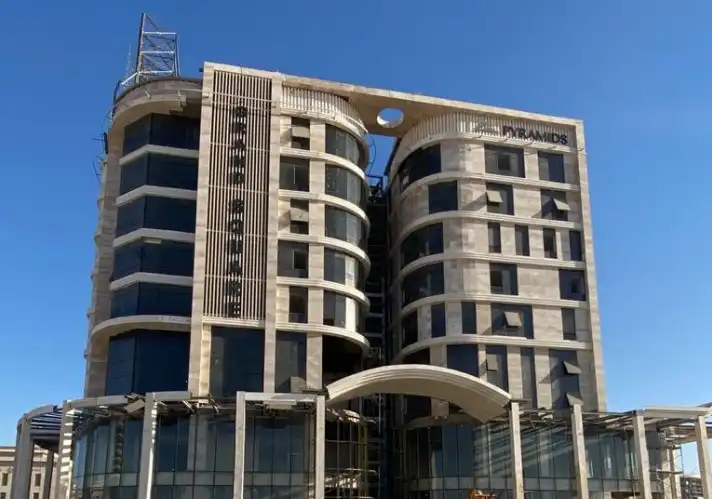
Grand Square Mall New Capital consists of a ground floor plus seven upper floors. The developer has allocated different floors to specific functions, which affects both pricing and suitability depending on what you’re planning.
Ground floor and first two floors: commercial retail units. These are for shops, showrooms, and retail businesses that need street-level visibility. Units start from 24 square meters and go up to around 125 square meters.
Third floor exclusively medical—clinics, diagnostic centers, healthcare facilities. Medical units range from approximately 95 square meters to 142 square meters, handling everything from single-practitioner clinics to multi-room medical centers.
Floors four and five in Grand Square Mall administrative offices, starting at 27 square meters. These suit consultancies, legal practices, financial advisors, corporate satellite offices.
Upper floors—six and seven—are designated for hotel apartments, a separate component aimed at medium-term business accommodation.
Building Infrastructure
Four elevators serve the eight-floor structure. There’s basement parking, though specific capacity numbers aren’t widely published. Security includes 24-hour personnel and surveillance cameras covering entrances and common areas.
Green spaces and landscaping cover roughly 80% of the site area, leaving 20% for the building footprint. This creates setbacks and plaza areas around the structure, though it also means the built area is relatively compact compared to the total plot.
The building uses central HVAC with individual unit controls. Column spacing and ceiling heights follow commercial standards, with medical floors featuring slightly higher ceilings for specialized equipment and ventilation.
What Units Actually Cost?
Pricing in Grand Square Mall varies by floor, unit size, and intended use. Administrative units start at approximately EGP 110,000 per square meter. Commercial retail spaces begin around EGP 180,000 per square meter. Medical units fall somewhere in between, though exact pricing depends on floor position and layout.
A 27-square-meter administrative office starts around EGP 2.2 million. A 38-square-meter retail shop begins near EGP 3.6 million. Larger medical clinics in the 100-square-meter range exceed EGP 10 million. These are base prices—corner units, better floor positions, and premium views cost more.
Payment Options
Pyramids Developments offers several payment structures in Grand Square Mall, all designed to reduce upfront capital requirements:
- Standard plan: 10% down, 10% on delivery, balance over seven years in unequal installments. This suits buyers who want moderate initial outlay but can handle variable payment amounts.
- Extended plan: 10% at contract signing, remainder over 10 years in unequal installments. This stretches payments further but may carry different pricing adjustments.
- Accelerated options: 30% down with balance over five years at 12% return, or 35% down over five years with 13% return. These “returns” refer to rental yield guarantees or developer buyback arrangements, though exact terms require direct confirmation with sales teams.
The unequal installment structure means payments aren’t evenly distributed—early years may have lower payments with increases later, or vice versa. Review the payment schedule carefully to match it against your cash flow projections.
Design and Finishing Standards
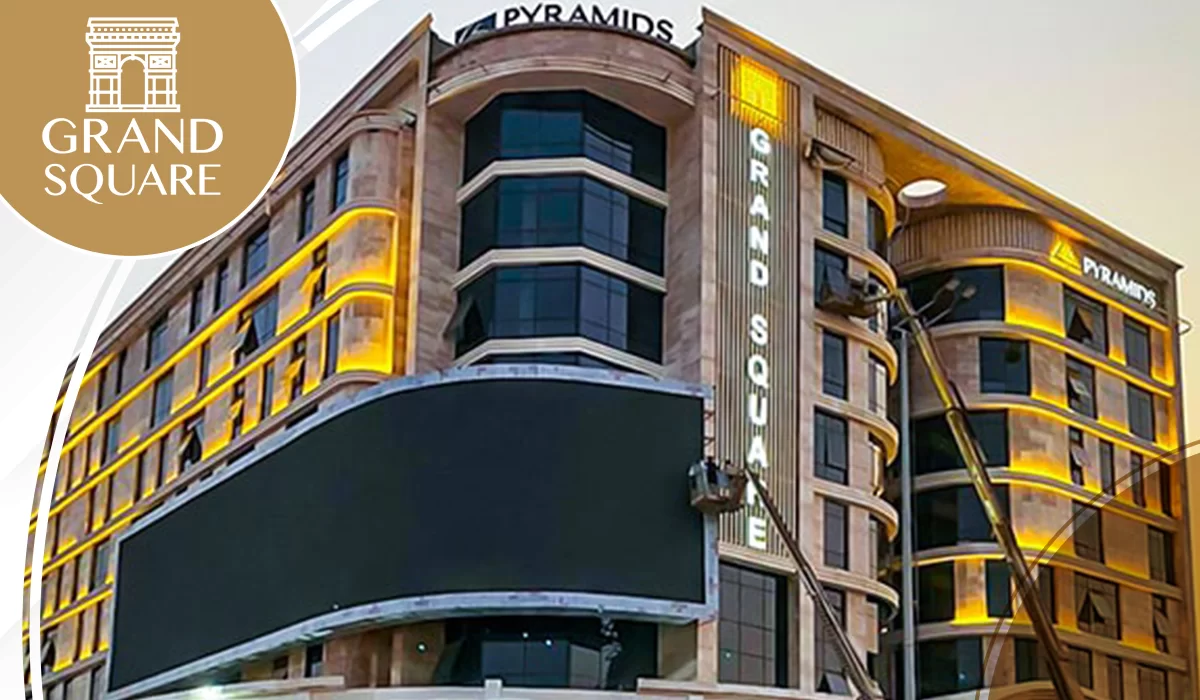
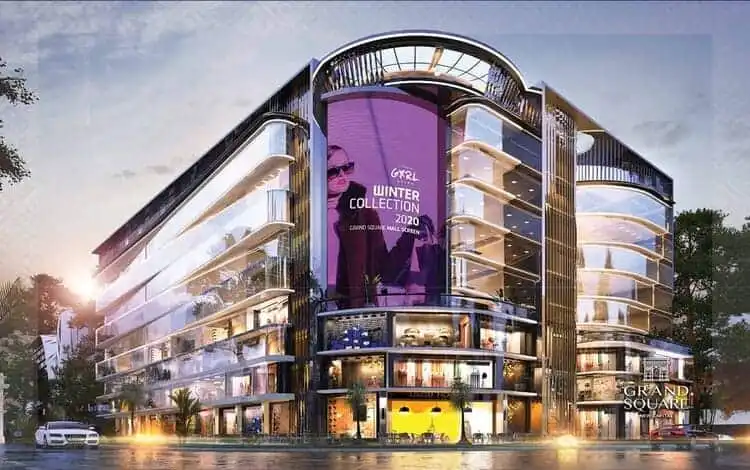
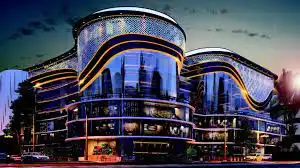
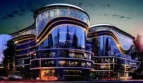
Grand Square Mall New Capital follows what the developer calls French-inspired contemporary architecture. The facade features blue-tinted glass curtain walls, creating a reflective exterior common in modern commercial buildings. A large LED screen on the main facade displays advertisements, generating potential auxiliary revenue for building management.
Interior finishes vary by unit delivery status. Some units come semi-finished—plastered walls, installed windows, basic electrical and plumbing rough-ins, but no flooring, lighting fixtures, or interior partitions. Others come fully finished with flooring, ceiling work, lighting, and HVAC systems installed. The distinction affects both price and your timeline to occupancy.
Common Areas
Lobbies and corridors in Grand Square Mall use granite or porcelain tile flooring, with painted or cladded walls. Elevator cabs are finished in stainless steel and mirrors. The entrance plaza includes water features and landscaped seating areas, maintained through service charges paid by unit owners.
Lighting in Mall Grand Square New Capital in common areas uses LED systems on timers and motion sensors to manage electricity costs. Fire safety systems include sprinklers, smoke detectors, and marked emergency exits, meeting Egyptian building code requirements for commercial structures.
Facilities and Services of Grand Square Mall
Beyond basic building infrastructure, Grand Square Mall New Capital includes several facilities that affect tenant experience and operating costs.
A health club on one of the upper floors provides gym equipment, a spa, and a jacuzzi. Access may be included with certain unit purchases or available through membership fees—this varies by sales package.
Restaurants and cafes occupy portions of ground floor retail space, some operated by the developer or building management, others leased to third-party operators. Food and beverage outlets help drive foot traffic throughout the day.
The developer has announced plans for an art academy in collaboration with Egyptian actor Ashraf Abdel Baqi, though details on size, location within the building, and operational timeline remain limited.
Management Structure
Grand Square Mall New Capital management handles common area maintenance, security staffing, and shared utility management. Unit owners pay monthly service charges based on unit size, typically ranging from EGP 15 to EGP 25 per square meter monthly, though exact rates should be confirmed in your purchase contract.
Waste management, pest control, and landscaping maintenance are included in service charges. Major repairs and capital improvements require owner approval through the building association, following Egyptian condominium law.
Investment Realities
The New Administrative Capital represents a significant bet on Egypt’s planned city development model. The government has relocated several ministries and is constructing infrastructure to support a population target of several million residents over coming decades.
For Grand Square Mall specifically, investment viability depends on several factors:
- Occupancy of surrounding districts: The Financial District’s success depends on banks and companies actually moving operations there. Several Egyptian banks have announced branch openings, and some government agencies have relocated, but full occupancy remains years away.
- Infrastructure completion: Road networks, public transportation, and utilities are still under development. The monorail and electric train projects connecting the New Capital to Cairo will significantly improve accessibility once operational, but construction timelines have experienced delays.
- Competitive supply: Grand Square isn’t the only commercial project in the area. Several other malls and office towers are under construction or planned, creating competition for tenants and customers. Your unit’s success depends partly on how quickly the market absorbs this new supply.
About Pyramids Developments
Pyramids Developments, the company behind Grand Square, was established in France in 2000 and entered the Egyptian market in 2013. The company’s portfolio includes work on Louvre Museum renovations and structural modifications to the French Parliament building, though these were subcontractor roles rather than full project development.
In Egypt, Pyramids has focused primarily on the New Administrative Capital and the Galala Plateau development near Ain Sokhna. Projects include Paris East Mall, Pyramids Business Tower, and La Capitale residential compounds in the New Capital, plus Sky City Galala in Ain Sokhna.
The company’s track record in Egypt spans about a decade, so there’s limited long-term performance data. Some projects have experienced delivery delays, a common issue in Egypt’s real estate sector due to infrastructure dependencies and financing challenges.
Financial Considerations
Private real estate developers in Egypt face financing challenges, particularly during economic volatility. Currency devaluation, inflation, and changes in banking regulations all affect project timelines and completion certainty.
Pyramids Developments has continued launching new projects, suggesting ongoing access to capital, but buyers should conduct their own due diligence on the company’s financial health. Requesting information on project insurance, completion guarantees, and building permit status provides additional protection.
Practical Steps for Buyers
If you’re seriously considering a unit in Grand Square Mall, several practical steps help you make an informed decision:
- Visit the site: Physical site visits reveal construction progress, surrounding development status, and accessibility far better than brochures. Check the condition of nearby roads, the status of neighboring projects, and overall activity level in the district.
- Review contract terms carefully: Egyptian real estate contracts can include clauses on delivery penalties, price adjustment mechanisms, and service charge calculations that significantly affect your total cost. Have a lawyer review the contract before signing.
- Verify permits and registrations: Confirm Grand Square Mall New Capital has all necessary building permits and that the developer can legally sell units. Check that the land title is clear and that the project is registered with appropriate government authorities.
- Understand total costs: Beyond the purchase price, factor in registration fees (typically 2.5% of purchase price), legal fees, service charges, and any fit-out costs if you’re buying semi-finished. These can add 5-10% to your total investment.
- Plan for delays: Construction timelines in Egypt frequently extend beyond initial projections. Build buffer time into your plans, especially if you’re coordinating business launches or tenant commitments with the delivery date.
Frequently Asked Questions About Grand Square Mall
What makes the location better than other commercial projects in the New Capital?
The mall sits directly in the Financial and Business District within the banks and investment companies zone. This means it’s surrounded by planned financial institutions, government offices, and corporate headquarters rather than being standalone. The four-entrance design on major boulevards provides accessibility from multiple directions.
Proximity to the government district means a built-in customer base of civil servants and embassy personnel. However, these advantages materialize fully only as surrounding districts reach intended occupancy levels, which remains ongoing.
Are the payment plans fixed or can they change?
Payment plans in Egyptian real estate contracts typically lock in the installment schedule at signing, protecting you from arbitrary changes. However, contracts often include clauses allowing price adjustments if delivery dates extend significantly or if government fees increase.
The unequal installment structure means your payment amounts vary by year according to a predetermined schedule—request this schedule in writing before signing. Currency risk exists if you’re earning in Egyptian pounds during a devaluation period, as your real purchasing power for installments can shift even though nominal amounts stay fixed.
What happens if the developer delays delivery?
Egyptian real estate contracts usually include penalty clauses for delivery delays, typically calculated as a percentage of purchase price per month of delay. However, these clauses often contain force majeure exceptions for delays caused by government actions, infrastructure dependencies, or other factors beyond the developer’s control.
In practice, enforcement requires legal action, which can be time-consuming. Review the specific penalty terms in your contract and verify whether they’re consistent with Egyptian Consumer Protection Law requirements.
Can foreigners purchase units in Grand Square Mall New Capital?
Egyptian law generally permits foreign ownership of commercial properties without the restrictions that apply to residential real estate in certain areas. Foreigners can own commercial units outright and register them in their name with the Egyptian Real Estate Registry.
You’ll need to complete the purchase through a licensed real estate lawyer who can handle the registration process and ensure compliance with foreign exchange regulations. Repatriating rental income or sale proceeds requires proper documentation and compliance with Central Bank of Egypt regulations.
What are realistic rental yields in this area?
Developer projections of 10-12% annual yields are optimistic and assume full occupancy in a mature market. Initial yields in the New Capital’s developing districts are more likely in the 6-8% range, with potential increases as the area establishes itself. Tenant acquisition speed depends heavily on your unit type and fit-out quality—a fully finished, well-located retail shop might lease within 3-6 months, while a semi-finished administrative office could take 6-12 months or longer. Medical units often require specialized fit-out that takes time but can command premium rents once complete. Budget for at least six months of vacancy and fit-out time in your financial projections.
Conclusion
Grand Square Mall presents a commercial investment opportunity in Egypt’s New Administrative Capital, with the primary advantage of location in the planned Financial District. The project offers a range of unit types across different floors, flexible payment structures that reduce upfront capital requirements, and a developer with international experience, though a relatively short track record in Egypt.
The investment case depends significantly on factors outside any individual buyer’s control—the pace of government ministry relocations, infrastructure completion timelines, and the speed at which the New Capital attracts residents and businesses. These uncertainties are inherent to investing in developing areas.
If you’re considering a unit, approach it as a medium to long-term investment rather than a short-term flip. Visit the site, verify all documentation, review contracts with qualified legal counsel, and build conservative assumptions into your financial projections. The New Capital represents an ambitious urban development project, and Grand Square’s position within the Financial District offers tangible advantages—but success requires patience, realistic expectations, and thorough due diligence before committing your capital.
Similar Listings
EVOLVE Tower New Capital | Commercial In...
Spinner Mall New Capital | What You Shou...
Ellite Mall New Capital Prices 2026