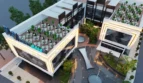
Description
The New Administrative Capital keeps drawing commercial projects, and Sky Light Mall is one of them. It’s not a Downtown showpiece—it’s a neighborhood mall in R7, developed by Mardev, covering 3,000 square meters with 87 units spread across three floors.
The thinking here is straightforward: R7 is filling up with residential compounds, and those residents need places to shop, eat, and handle daily business without driving to Downtown. Sky Light Mall New Capital positions itself to serve that growing population.
Units range from 20 to 105 square meters. Payment plans stretch up to eight years. Mardev has a background in government contracts and residential work, which gives the project some operational grounding.
I’ll walk through the location rationale, what you actually get in terms of space and facilities, how the pricing breaks down, and what the investment picture looks like—without the usual sales pitch.
Where Sky Light Mall Actually Sits in R7?
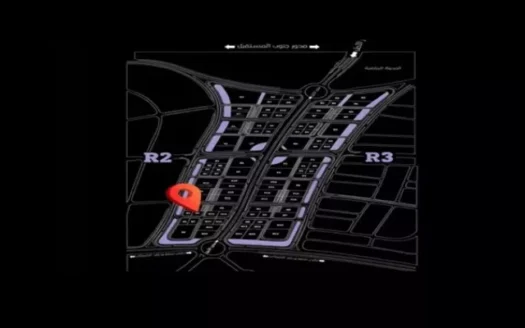
Sky Light Mall New Capital is in the 7th Residential District, specifically the K2 area with frontage on J2. It’s not trying to compete with the Downtown cluster—it’s positioned to serve the neighborhoods around it.
The Diplomatic District is right there, which means embassies and their staff. That’s consistent foot traffic from people with steady incomes and predictable routines.
The Green River, Central Business District, and government administrative buildings are within reach. These aren’t just landmarks—they tell you where people work and where they’ll need services during the day.
The mall sits on a 60-meter-wide street, part of the main road network. The monorail and electric train connections are improving access from Cairo, which addresses the distance issue that used to make people hesitant about the New Capital.
The Russian University is nearby, along with three international schools and a hospital. Those institutions bring families, which supports retail and service businesses. Compounds like IL Bosco, Pukka, and Midtown Solo are in the surrounding area, adding the residential density that commercial spaces need to survive.
How Sky Light Mall New Capital Is Laid Out?
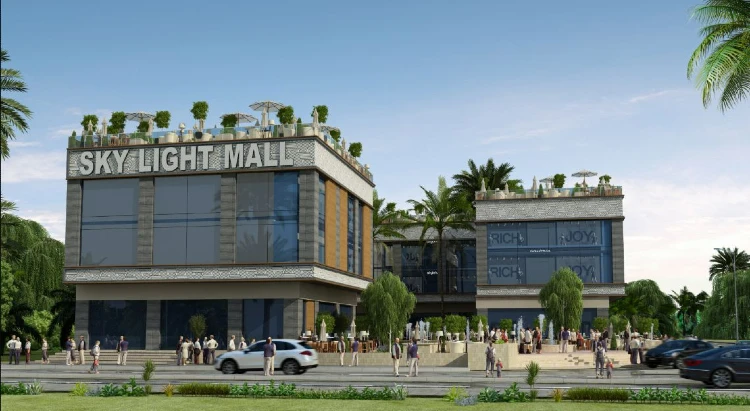
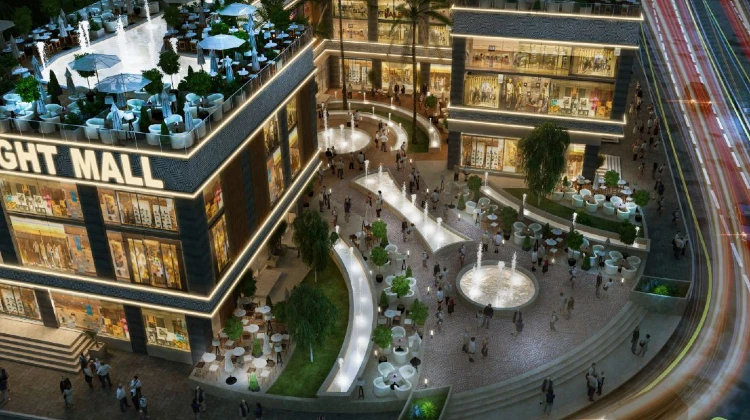
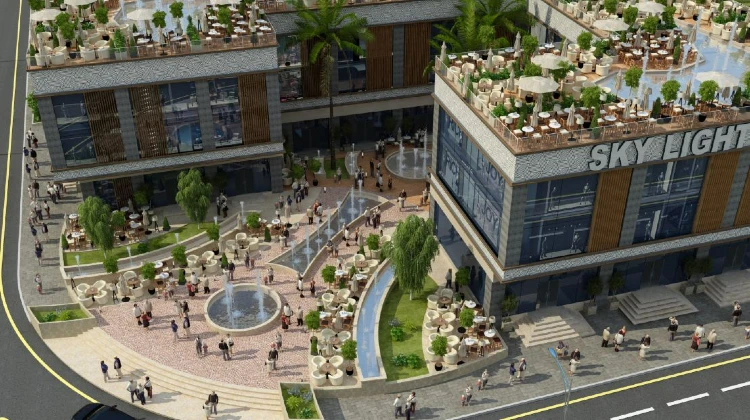
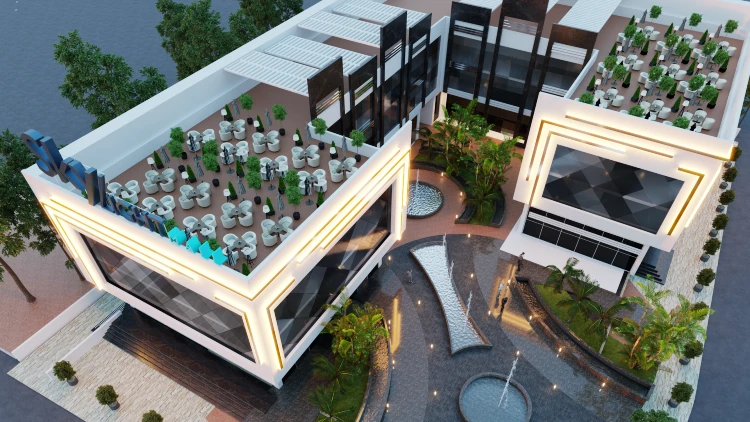
Sky Light Mall New Capital spans three levels—ground floor, first floor, second floor—plus a garage. The design follows standard commercial architecture: glass facades, open circulation, clear sightlines.
At 3,000 square meters total, this is a neighborhood mall, not a regional destination. That scale makes sense for R7, where people want convenient access without traveling far.
There’s a 2-acre garden space included. Outdoor areas aren’t just decorative—they increase how long people stay, which helps tenants through more exposure.
Ground floor units in Sky Light Mall run 40 to 100 square meters. Good for retail, banks, restaurants—anything needing street visibility. First floor starts at 20 square meters, goes to 70. That fits smaller offices, clinics, specialized retail. Second floor is similar, usually administrative offices or services that don’t need ground-level presence.
Escalators and elevators handle vertical movement. Multiple entry points spread out foot traffic. Emergency exits and fire systems are built in throughout.
Solar panels in Sky Light Mall New Capital help with power costs for common areas. Backup generators keep things running during outages, which matters for businesses that can’t afford downtime.
What’s Available: Commercial and Admin Units
The 87 units in Sky Light Mall split between commercial and administrative uses. This mix lets the mall serve different business types instead of just retail.
Ground Floor:
These spaces work for businesses needing visibility and direct customer contact. Retail shops, cafes, restaurants, pharmacies, bank branches. Sizes from 40 to 100 square meters give tenants flexibility. Larger units can handle supermarkets or anchor tenants that pull traffic.
First Floor in Mall Sky Light New Capital:
Businesses that benefit from mall traffic but don’t need street level. Medical clinics, salons, training centers, professional offices. The 20 to 70 square meter range covers single practitioners up to multi-room setups.
Second Floor in Sky Light Mall New Capital:
Mostly administrative offices. Accounting firms, legal offices, marketing agencies, corporate branches. Quieter than ground level, which suits focused work.
The size variety in Sky Light Mall addresses different budgets and business scales. A startup can enter with 20 square meters. An established business might combine units or take a larger ground space.
What It Costs and How You Pay?
Sky Light Mall pricing reflects its neighborhood positioning rather than premium Downtown rates. The per-meter costs and total unit prices sit below comparable Downtown properties.
- Ground Floor: Units between 41 and 65 square meters: 7.2M to 13M EGP. Higher pricing reflects street visibility and retail potential. Per-meter rates run 65,000 to 70,000 EGP.
- First Floor: 40 to 72 square meters: 4.2M to 8.6M EGP. Lower than ground floor due to reduced visibility, but you still get mall traffic.
- Second Floor: 43 to 75 square meters: 4.4M to 8.2M EGP. These rates suit administrative uses where position within the building matters less.
Mardev offers four payment structures:
- 5% down, installments over 5 years
- 10% down, installments over 6 years
- 15% down, installments over 7 years
- 20% down, installments over 8 years
Cash buyers get a 30% discount, which works if you have immediate capital. The extended terms lower the entry barrier for individual investors or small business owners managing cash flow.
Delivery is scheduled within six months from purchase. That’s notably shorter than residential projects that often take years. Matters when you’re calculating return periods.
Sky Light Mall New Capital Facilities
Sky Light Mall New Capital includes operational features supporting tenants and visitors. These aren’t luxury touches—they’re practical necessities for a functioning commercial space.
- Food and Dining: A food court houses multiple cafes and restaurants. Keeps visitors on-site longer, which benefits all tenants through increased exposure. Variety serves different price points and tastes.
- Entertainment: There is A 7D cinema in Sky Light Mall extends visit duration beyond shopping or appointments. The kids’ area has trained security and surveillance, addressing parents’ safety concerns while they handle business.
- Security: 24-hour personnel patrol the premises. Surveillance cameras cover common areas and entries. Visible security reduces theft risk and creates a safer environment.
- Parking: The garage in Sky Light Mall handles visitor and tenant parking. Essential in an area where public transport is still developing. Adequate parking removes a major friction point.
- Banking: ATMs distributed throughout. Space allocated for bank branches. This financial infrastructure supports tenant operations and customer convenience.
- Connectivity: Free high-speed internet throughout. Not optional for modern commercial spaces—it’s expected infrastructure.
- Climate Control: Central air conditioning in Mall Sky Light New Capital maintains comfortable temperatures. Matters in Egypt’s climate. Consistent control protects merchandise and encourages longer visits.
- Maintenance: Daily cleaning and maintenance teams keep common areas functional. This consistency protects property values and tenant satisfaction.
Investment Logic Without the Hype
Sky Light’s investment appeal rests on practical factors rather than speculative promises.
R7’s residential density is growing. Multiple compounds are under construction or recently completed. Commercial spaces succeed when surrounded by residents. Sky Light positions itself to serve that market.
Pricing sits below Downtown equivalents, affecting both entry cost and potential yields. Lower acquisition costs mean you can achieve positive cash flow sooner, assuming reasonable rental rates.
The payment flexibility—particularly the 5% down option—allows entry with limited capital. This accessibility broadens the buyer pool but also means competition from other investors with similar strategies.
Mardev’s track record includes government contracts and completed residential projects. This suggests operational capability, though past performance doesn’t guarantee future results.
The New Capital’s infrastructure keeps developing. Transportation links improve access from Cairo and other areas. As these connections mature, the distance factor becomes less significant.
Rental yields depend on tenant quality and market absorption. Ground floor retail typically commands higher rents but requires the right tenant mix. Upper floor offices offer more stable, longer-term tenancies at lower per-meter rates.
What’s Around Sky Light Mall
Sky Light Mall New Capital doesn’t operate in isolation. Success depends partly on surrounding developments bringing residents and workers to the area.
- Residential Compounds: IL Bosco, Pukka, Midtown Solo, and Atika are within the vicinity. These house families and professionals needing convenient access to services, retail, dining. The more units that reach occupancy, the stronger the customer base.
- Educational Institutions: The Russian University and three international schools serve the area. These bring students, faculty, staff—populations supporting cafes, bookstores, stationery shops, other services. School schedules create predictable traffic patterns tenants can plan around.
- Healthcare: A hospital near Sky Light provides another anchor driving consistent traffic. Medical facilities attract patients, visitors, staff throughout the day, supporting pharmacies, medical supply stores, food services.
- Other Commercial Projects: Paris East Mall, Opal Mall, G3 Mall, and Audaz Mall operate in different New Capital districts. Not direct competitors—they serve different geographic areas. However, they establish market expectations for amenities, tenant mix, rental rates that Sky Light must meet or differentiate from.
R7’s character is still forming. Unlike Downtown, which targets corporate headquarters and government offices, R7 is developing as a residential area with supporting commercial infrastructure. Sky Light’s success depends on correctly reading that character and serving it appropriately.
About Mardev Developments
Mardev entered real estate in 1989 through merging three companies: El-Marwa for Real Estate Investment, El-Marwa for Urban Development, and Heliopolis for Contracting and Urban Development.
The portfolio includes government contracts rather than exclusively private developments. This includes 60 public schools for the Educational Buildings Authority in Beni Suef and Cairo, 19 hospitals for Nile Company, social housing projects for the Armed Forces Authority.
In the private sector, Mardev completed 10 residential compounds in Badr City and approximately 30 villas in New Cairo and Fifth Settlement. Also three residential towers in Nasr City and nine residential complexes for American collective housing.
Most recently, Mardev launched Menorca Compound in the New Capital before undertaking Sky Light Mall. This progression from government contracts to private residential and now commercial shows expanding scope, though commercial mall management differs from residential operations.
Frequently Asked Questions
What makes R7 different from Downtown for commercial property?
Sky Light sits in the 7th Residential District, developing as residential rather than corporate. Less competition from major malls but a different customer base—primarily residents rather than office workers. The strategy works if residential occupancy in surrounding compounds keeps growing. Downtown malls serve government employees and corporate offices. Sky Light targets neighborhood convenience and daily needs.
How do the payment plans actually work?
Payment structures require 5% to 20% down, with balance paid in equal installments over 5 to 8 years. Example: a 5M EGP unit with 10% down requires 500K EGP upfront, with remaining 4.5M EGP divided into 72 monthly payments over 6 years (roughly 62,500 EGP monthly). These installments typically don’t include interest in the traditional sense, but pricing already factors in time value of money. Cash buyers get 30% discount, revealing actual cost of installment terms.
What businesses work in neighborhood malls?
Neighborhood malls support service businesses and daily-need retail rather than luxury brands or destination shopping. Successful tenants typically include supermarkets, pharmacies, medical clinics, cafes, quick-service restaurants, banks, beauty salons, barbershops, children’s education centers, professional services. Businesses depending on repeat local customers rather than tourist traffic perform better.
What are the real risks here?
Primary risk in Sky Light Mall is absorption rate—how quickly surrounding compounds fill with actual residents. Empty apartments don’t generate customers. Transportation infrastructure, while improving, still affects willingness to relocate from established Cairo neighborhoods.
Competition from other New Capital commercial projects could oversupply the market relative to population growth. Management quality matters significantly. Egypt’s economic volatility affects rental rates and tenant stability.
Ground floor versus upper floors for rental yield?
Ground floor commands higher rents per square meter due to visibility and retail potential, but costs more to purchase. Upper floor administrative units cost less but rent for lower rates. Often upper floors provide comparable or better yields because lower purchase price offsets lower rent. Ground floor suits investors seeking higher absolute rental income. Upper floors work for those prioritizing yield percentage and longer-term stable tenants.
What if R7 development slows down?
If surrounding compounds experience slow occupancy, Sky Light Mall faces reduced foot traffic and lower demand. This would pressure rental rates and potentially leave units vacant. Investors on installment still owe payments regardless of rental income. The mall’s success fundamentally depends on R7’s residential development proceeding as planned.
Checking occupancy rates in nearby compounds like IL Bosco, Pukka, Midtown Solo provides some indication, though past performance doesn’t guarantee future results.
Conclusion
Sky Light Mall New Capital operates in a different segment than high-profile Downtown developments. It’s a neighborhood commercial center serving R7’s residential density. That positioning brings both advantages and limitations.
The pricing structure and extended payment terms in Sky Light Mall make entry accessible for individual investors and small business owners. The location near diplomatic areas, schools, residential compounds provides a logical customer base, assuming those developments keep filling with actual residents.
Mardev brings government contracting experience and residential project history, though commercial mall management requires different capabilities. The six-month delivery timeline and practical facility mix suggest operational focus rather than speculative positioning.
The investment case depends on R7’s residential growth proceeding as planned and the New Capital’s transportation infrastructure making daily commuting practical. These aren’t guaranteed outcomes, but they’re the factors determining whether Mall Sky Light achieves stable occupancy and reasonable returns.
Evaluate this project based on those fundamentals rather than promotional narratives about Egypt’s new capital city. The math either works for your situation or it doesn’t.
Similar Listings
EVOLVE Tower New Capital | Commercial In...
Radical 1 Mall New Capital | Commercial ...
Ellite Mall New Capital Prices 2026