Description
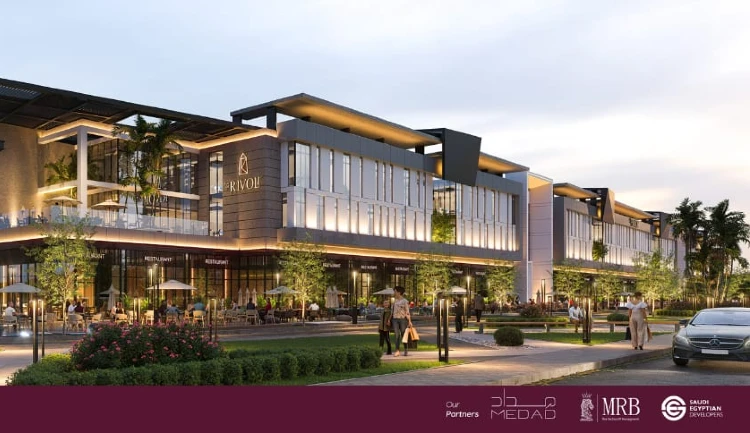
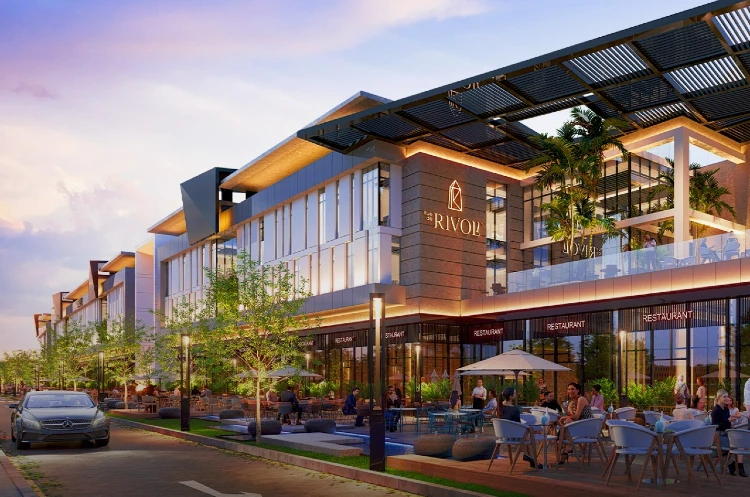
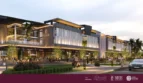
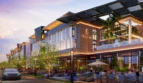
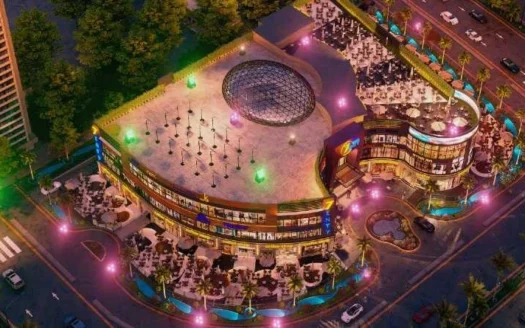
The New Administrative Capital is still finding its rhythm as Egypt’s future government and business center. Rivoli, developed by Anchor Real Estate, sits on Mohammed bin Zayed South Road across 10,815 square meters. It’s a mid-rise mall with ground-floor retail, two floors of mixed commercial and administrative space, and a rooftop level.
What sets it apart is the 70% open-to-built ratio. Most of the plot stays unbuilt, which means wider walkways, green zones, and a 429-car garage. The project targets businesses looking for visibility near the R7 and R8 residential districts, plus investors weighing the New Capital’s commercial potential.
Anchor partnered with MRB for project management and MEDAD for architectural design. MEDAD has handled projects across the Middle East, and their input shows in the dynamic glass façade and interior flow. The building can adjust its transparency based on sunlight and tenant needs, and smart billboards are integrated into the exterior to reduce signage clutter.
The layout of Rivoli Mall New Capital includes ramps, accessible restrooms, and designated parking for people with disabilities. Meeting rooms on each floor come with adjustable setups, so tenants can shift layouts depending on whether they’re hosting clients or running internal sessions.
Who’s Behind Rivoli: Anchor Developments
Anchor Developments operates under Al Sarh Holding, a company with 30 years in infrastructure and real estate. Al Sarh has worked on road projects in Upper Egypt, partnered with the Urban Communities Authority, and contributed to the express train initiative. Anchor was established in 1990 and has delivered close to 100 projects, including Blue-vert in the New Capital.
The company’s reputation centers on timely handovers and finished units that don’t require major additional work. Projects tend to meet stated completion dates, and Anchor includes post-handover maintenance for a defined period.
For Rivoli, Anchor brought in external contractors and design firms rather than handling everything internally. This reduces execution risk and brings specialized knowledge to façade engineering, sustainability features, and building systems.
The approach is practical. Anchor focuses on mid-to-high-end developments in districts where infrastructure is already active or under construction. They’re not chasing experimental designs or unproven locations. Rivoli fits that pattern: a straightforward commercial building in a district that’s seeing steady residential development.
Location: Mohammed bin Zayed and the R7/R8 Corridor
Rivoli is on the northern axis of Mohammed bin Zayed, close to the R7 and R8 residential districts. These neighborhoods host compounds like Ramtan, Soli Golf Residence, and Dejoya 3 by Taj Misr. Proximity to established housing means a built-in customer base and potential tenant pool.
The mall sits minutes from the Expo City, the Cathedral, Al Fattah Al Aleem Mosque, and the Medical City. The Government Quarter, Presidential Palace, and Al Massa Hotel are nearby. A planned monorail station within walking distance will connect Rivoli to other parts of the capital and eventually to Greater Cairo, though the exact timeline for that service hasn’t been finalized.
Road access includes the regional ring road, Suez Road, and the Southern Axis. You can reach the site from Ain Sokhna, New Cairo, and central Cairo without navigating through congested residential streets. For businesses targeting government clients or residents in R7 and R8, the positioning makes sense.
Neighboring commercial projects include Obsidier Tower, Sixty-Three Tower, and Harmony Tower. These buildings cater to similar business profiles, which can create a commercial cluster effect. It also means competition for tenants and customers, so differentiation will matter once the area fills in.
Design and Sustainability Features
Rivoli’s design emphasizes natural light and energy efficiency. The glass façade reduces the need for artificial lighting during the day, while motion-sensor LEDs in common areas cut electricity use after hours.
Solar panels on the roof generate part of the building’s energy needs. Solar water heaters reduce reliance on electric or gas systems. A rainwater drainage system channels runoff into the public network, and waste recycling stations support the New Capital’s broader sustainability goals.
Inside, Mall Rivoli New Capital uses visual intercoms, electronic gates with ID access, and 24/7 video surveillance. Four elevators and multiple escalators handle vertical movement. Lobbies on each level include seating areas and information desks.
Meeting rooms come with smart control systems for lighting, temperature, and AV equipment. These rooms can be reserved by office tenants or rented by external businesses for short-term use.
Parking includes a smart guidance system that directs drivers to available spaces. Electric vehicle charging stations are installed, and a car care service operates within the garage for basic maintenance and cleaning.
Anchor installed tall pylon signs visible from Mohammed bin Zayed Road, making the building easier to spot for first-time visitors. Outdoor seating areas with greenery provide breaks between meetings or shopping trips.
Rivoli New Capital Mall isn’t trying to reinvent commercial real estate. It’s applying proven features—good lighting, efficient parking, accessible design—in a location where those features aren’t yet standard.
What’s Inside: Retail, Offices, and Medical Units
Rivoli’s ground floor is reserved for retail. Unit sizes vary, but pharmacies, cafes, and branded shops are the intended tenants. One pharmacy unit measures 90 square meters and is priced at approximately 200,000 EGP per square meter, totaling around 18 million EGP.
The first and second floors mix retail with administrative offices. Office units start at 38 square meters, with prices beginning at 45,000 EGP per square meter. These spaces come fully finished: flooring, lighting, and HVAC are installed. Tenants can move in with minimal additional fit-out.
Anchor hasn’t disclosed a full tenant list, but the developer expects a mix of local and international brands, financial services firms, and medical clinics. The New Capital’s growing population and government workforce create demand for everyday retail, professional services, and healthcare.
Shared amenities in Rivoli Mall New Capital include ATMs from multiple banks, restaurants, cafes, and a children’s play area. The play zone is designed to keep families in the mall longer, which increases dwell time and potential spending.
Office tenants benefit from high-speed internet infrastructure, reception services, and regular building maintenance. Anchor provides a 24-month post-handover maintenance period covering common areas and building systems.
The mix in Mall Rivoli New Capital is intentional. Ground-floor retail captures walk-in traffic. Upper-floor offices serve businesses that need proximity to government districts but don’t require street-level visibility. Medical units benefit from both: accessibility for patients and professional surroundings for practitioners.
Pricing and Payment Plans
Units in Rivoli start at 1.8 million EGP. Pricing depends on size, floor, and location within the building. Ground-floor retail commands higher per-square-meter rates than upper-floor offices.
Anchor offers three primary payment plans:
- 10% down payment with installments over 6 years
- 15% down payment with installments over 7 years
- 20% down payment with installments over 8 years
Cash buyers receive discounts up to 20%. Early investors gain priority in unit selection. Delivery is scheduled three years from the contract date.
For businesses, the extended payment terms reduce upfront capital requirements. You can allocate funds to fit-out, inventory, or staffing instead of tying everything up in the purchase price. For investors, the installment plans allow gradual capital deployment while the New Capital’s commercial market matures.
The pricing of Rivoli New Capital Mall falls within the mid-to-high range for the area. It’s not the cheapest option, but it’s also not positioned as a premium product. You’re paying for location, design partnerships, and Anchor’s track record.
Who Should Consider Rivoli?
Rivoli works well for retail brands targeting middle-to-upper-income residents. The proximity to R7 and R8 compounds means a customer base that can support cafes, pharmacies, and specialty shops.
Professional service firms needing office space near government districts will find the location practical. The monorail station (once operational) will improve accessibility for employees and clients. The meeting rooms and reception services reduce the need for extensive fit-out.
Medical practitioners looking for clinics in a high-visibility location should consider the ground or first floors. The building’s accessibility features and parking capacity make it easier for patients to visit.
Startups and SMEs may find the smaller office units practical. Established brands might prefer ground-floor retail for maximum exposure. Investors looking for commercial real estate in the New Capital should weigh Rivoli against neighboring projects and consider the timing of delivery relative to the area’s development curve.
How Rivoli Compares to Nearby Projects?
Rivoli’s main differentiators are its location on Mohammed bin Zayed near R7 and R8, the dynamic glass façade, and the partnership with MEDAD for design. Neighboring towers like Obsidier and Sixty-Three offer similar office and retail space, but Rivoli’s lower building coverage and focus on open areas may appeal to businesses prioritizing outdoor seating or customer circulation.
Pricing is competitive. You’re not paying a premium for the Anchor name, but you’re also not getting a bargain. The value proposition centers on location, design execution, and payment flexibility.
The monorail station proximity is a potential advantage, assuming the service launches on schedule. If it doesn’t, road access remains strong, but the building loses some of its differentiation.
The tenant mix will matter. If Anchor secures recognized brands for ground-floor retail, it will drive foot traffic and support upper-floor occupancy. If the retail mix is generic or slow to fill, the project will struggle to build momentum.
Rivoli New Capital is a practical commercial project in a district that’s seeing steady residential development. The location near R7 and R8, combined with flexible payment plans and partnerships with experienced design and management firms, gives it a solid foundation.
The project’s emphasis on sustainability, accessibility, and adaptable interiors aligns with the New Capital’s broader development vision. Whether you’re a retailer seeking visibility, a professional firm needing office space, or an investor evaluating commercial real estate, Rivoli offers a defined set of features without overselling.
As with any emerging market, due diligence remains essential. Review comparable projects, confirm tenant interest, and verify delivery timelines before committing. The New Capital is still finding its footing, and not every project will succeed.
For those ready to move forward, Rivoli represents a grounded entry point into one of Egypt’s most ambitious urban developments. It’s not the flashiest option, but it’s built on a logical premise: put commercial space where people are moving, design it well, and offer payment terms that work for businesses and investors.
If you’d like more details on unit availability, current pricing, or tenant commitments, reach out to Anchor Developments or an authorized sales agent. Get the specifics before you decide.
Similar Listings
Quan Tower New Capital | What Contact De...
Seventy Mall New Capital Prices 2026
Vida Business Complex | Commercial Space...