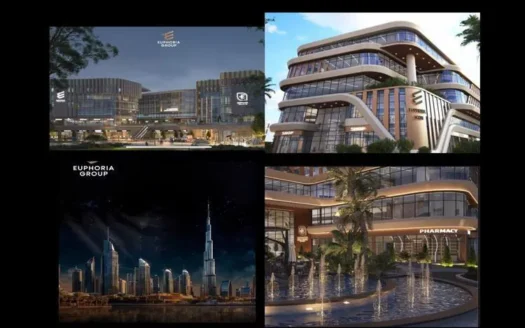
Description
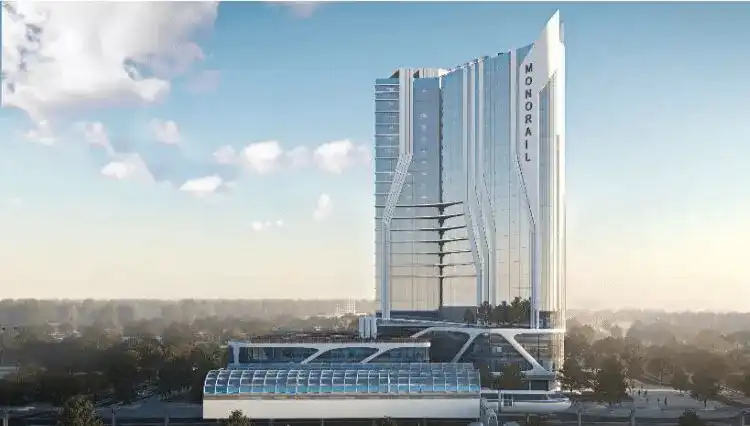
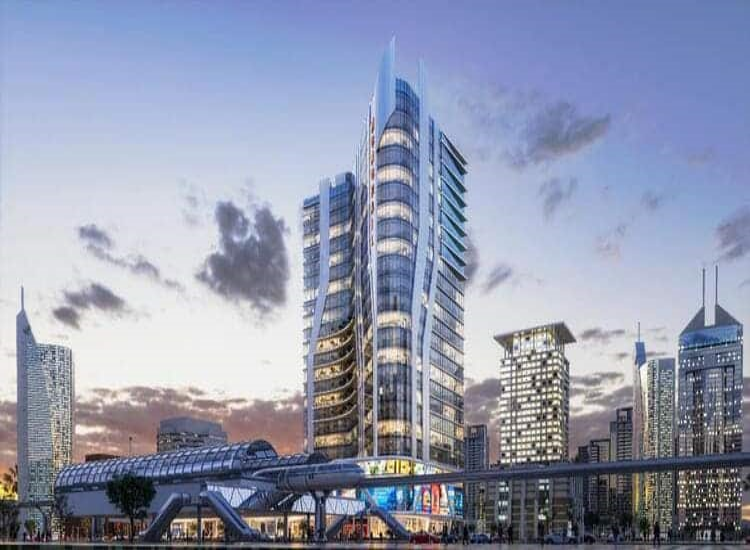
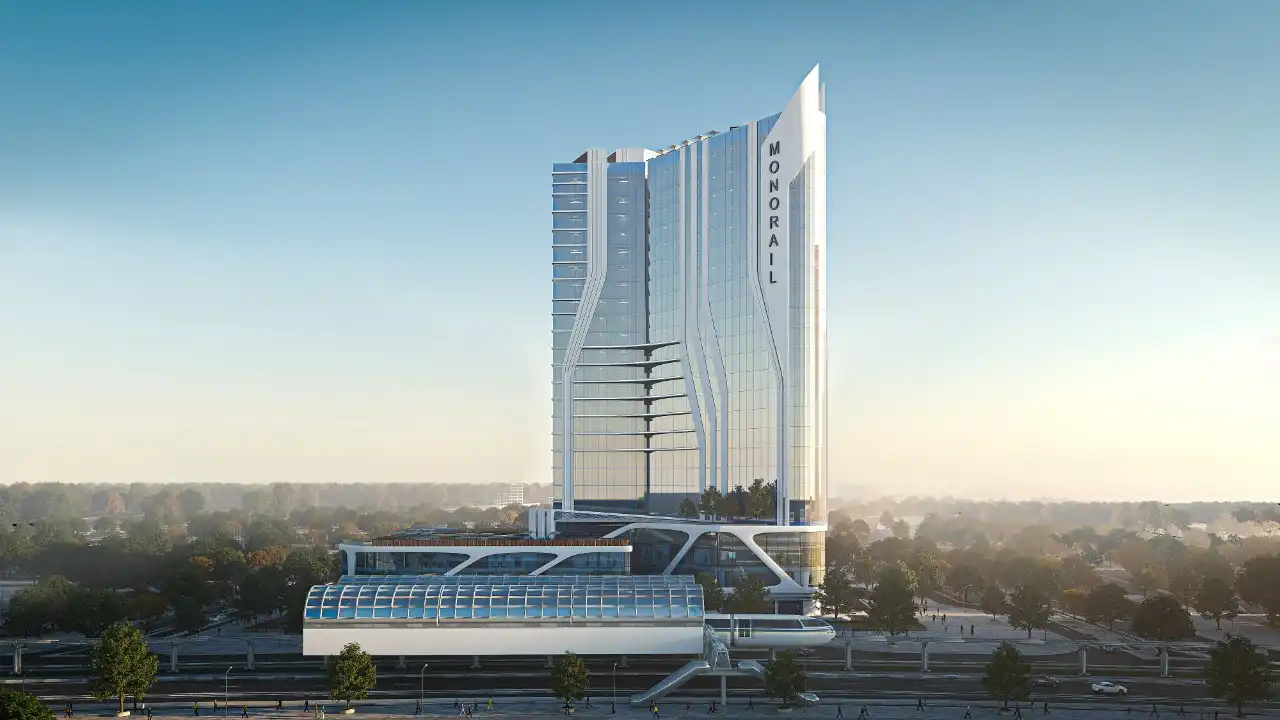
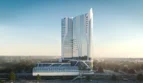
Monorail Tower sits in the Tourist Towers district of Egypt’s New Administrative Capital, developed by Emaar Rezk Group (ERG Developments). The project occupies roughly 12,000 square meters and rises 26 floors, combining retail shops, administrative offices, medical clinics, and hotel apartments under one structure.
What sets this tower apart is its physical connection to the monorail station. You step off the train and walk directly into the building—no outdoor transfers, no weather exposure. For a city still building out its infrastructure, that kind of transit integration matters.
The site overlooks the Green River and sits close to the Gold Market and government ministry buildings. Units start at 30 square meters for commercial spaces and go up to 120 square meters for larger formats. ERG is targeting December 2028 for completion, which gives buyers time to plan but also means committing to a pre-construction purchase.
Prices begin at 4,315,556 EGP for administrative units, with payment plans stretching up to 12 years. Whether that pencils out depends on your financing options and how you read the New Capital’s growth trajectory.
Where Monorail Tower Actually Sits
Monorail Tower Mall New Capital is in Downtown, specifically the Tourist Towers zone. This puts it within the city’s commercial corridor rather than out in the residential suburbs.
From the site, you can see the Green River—a landscaped channel running through the central district. It’s more of a visual amenity than a functional waterway, but it does break up the density.
The monorail station attachment is the main locational draw. The system connects different zones within the New Capital and links back to older Cairo neighborhoods. If you’re working in the tower or running a clinic, that expands your potential customer base beyond just people who drive.
Walking distance gets you to:
- Masjid Misr
- The New Museum
- Souq Al Dahab
- Ministry district offices
- Several oil company headquarters
The road network ties into the Regional Ring Road, so vehicle access works fine if that’s your preference. You’re not forced into transit dependency, but the option exists when traffic gets heavy.
How the Building Breaks Down?
Monorail Tower uses a vertical separation model. Different floors handle different functions, which keeps a dental clinic from sitting next to a noisy restaurant.
- Ground floor: Restaurants, cafes, and a pharmacy. These get the foot traffic and street visibility.
- First floor: A large food court, reportedly around 2,800 square meters. That’s the lunch crowd magnet for office workers upstairs.
- Second floor: Cinema, retail shops, and a kids’ play area in Monorail Tower. The children’s space is a practical addition—commercial towers don’t always think about families.
- Third floor: More commercial units totaling 2,500 square meters, with terrace access. Useful if you’re running a cafe or want outdoor seating.
- Fourth and fifth floors: Medical facilities. Labs, radiology, consultation rooms. Putting healthcare on dedicated floors means proper infrastructure for equipment and patient flow.
- Sixth through twenty-third floors: Administrative offices. That’s 18 floors of commercial inventory, forming the core of the building’s revenue potential.
- Twenty-fourth and twenty-fifth floors: Hotel apartments and serviced units on top in Monorail Tower. Upper-floor views, residential setup.
The facade is glass and steel, contemporary but not groundbreaking. Floor-to-ceiling windows appear standard. Specific architectural details are thin in the available materials.
Office and Commercial Spaces
Administrative units start at 34 square meters. That works for solo practitioners, small teams, or companies testing the New Capital market before committing to larger space.
All offices get central air conditioning and high-speed internet as baseline infrastructure. Elevators are panoramic (glass-walled), and there are escalators for inter-floor movement. Service elevators handle deliveries separately.
Shared meeting rooms and reception areas in Monorail Tower are available, which makes sense for smaller tenants who don’t need dedicated conference space. If you’re meeting clients twice a month, renting a room beats allocating 15 square meters permanently.
The governmental district proximity is practical for certain business types—legal practices, consultancies, contractors working with state entities. If your work involves regular ministry visits, being monorail-adjacent cuts down on travel time.
Commercial units in Monorail Tower is on the ground and third floors range from 30 to 50 square meters. Retail operations, service businesses, professional offices wanting street presence. The third-floor terrace adds flexibility for food and beverage operators.
Medical Facilities Setup
Floors four and five are built out for healthcare use, with units starting at 34 square meters. General practice, dental, dermatology, outpatient specialties—that’s the expected tenant mix.
Larger units in Monorail Tower can accommodate diagnostic centers, physical therapy setups, or practices needing space for equipment. Grouping medical services on two floors creates a mini medical hub, which can drive patient referrals between practices.
Medical units come fully finished with air conditioning installed. That’s a practical consideration—healthcare spaces have specific requirements, and finishing them yourself adds cost and delays opening.
Parking and monorail access matter more for medical tenants than most. Patients, especially older ones or those with mobility issues, need easy access. Being transit-connected expands your patient catchment beyond just people who drive.
The New Capital’s residential population is growing as families relocate from Cairo. Local healthcare demand follows population, so establishing early in a high-traffic tower positions you to capture that growth.
What Units Cost?
Monorail Tower pricing starts at 4,315,556 EGP for administrative offices. Medical units begin at 4,705,556 EGP. Commercial shops start at 6,375,444 EGP. Hotel apartments run from 7,100,000 EGP upward.
These are total unit prices, not per-square-meter figures, so comparing across developments requires some math. The spread between unit types reflects expected rental yields and operating costs for each category.
ERG offers payment plans starting at 10% down with installments up to 12 years. That lowers the entry barrier, though longer payment terms mean you’re paying more overall through embedded financing costs.
Cash buyers get discounts ranging from 27% to 30% depending on down payment size. A 40% down payment with the balance over three years gets you a 30% discount—that’s substantial and improves your return if you have the capital available.
The December 2028 delivery date means you’re buying pre-construction. That carries completion risk. ERG has delivered previous New Capital projects (Ri8, Diamond Tower), which provides some track record, but construction delays happen.
Payment Plan Breakdown
ERG offers several installment structures. Here’s what’s available:
- 10% down, balance over 6 years
- 15% down, balance over 7 years
- 20% down, balance over 8 years
- 35% down, balance over 9 years
- 25% down, 10% after year one, 10% after year two, balance over 10 years
- 25% down, 10% after year one, 15% after year two, balance over 12 years
- 40% down, 15% on receipt, balance over 3 years post-delivery
Cash payment options:
- 30% down with 27% discount, balance over 3 years
- 40% down with 30% discount, balance over 3 years
The longer plans in Monorail Tower reduce upfront capital requirements but increase total cost. If you have financing access at reasonable rates, running the numbers against these embedded financing charges is worth the time.
Retail and Restaurant Component
The ground floor dedicates 5,000 square meters to restaurants. That’s a dining district within the building, supporting lunch traffic from offices and evening traffic from surrounding residential areas.
The first-floor food court adds casual dining at a different price point. Quick lunch versus sit-down dinner—two different occasions, two different revenue streams.
Second and third-floor retail space totals about 2,500 square meters. Fashion, electronics, personal services, specialty retail that benefits from office worker and resident traffic.
The retail component differentiates Monorail Tower from pure office buildings. It creates internal foot traffic that benefits all commercial tenants through visibility and customer crossover.
Anchor tenants like the cinema and large food court draw visitors who wouldn’t otherwise enter the building. That traffic generation matters particularly now, while the New Capital is still building density. In mature urban areas, street traffic provides that function. Here, you need to create it internally.
Mall Monorail Tower New Capital Services and Infrastructure
- Security in Monorail Tower New Capital Mall includes 24-hour personnel, CCTV coverage, and controlled access. That addresses concerns about commercial towers in areas where surrounding development is still incomplete.
- Fire suppression systems and emergency protocols meet code requirements. Backup power keeps elevators running and essential systems operating during outages—a practical consideration when utility infrastructure is still maturing.
- Cleaning and maintenance services in Monorail Tower Mall New Capital are part of the building management structure, though how costs split between developer and unit owners needs clarification in purchase agreements.
- Smart building systems optimize energy use for lighting and climate control, potentially cutting operating costs. These systems adjust based on occupancy and time of day rather than running constantly on manual settings.
- Parking in Mall Monorail Tower New Capital is ample, accommodating the higher vehicle ownership typical in new suburban developments. The parking management system guides drivers to open spots, reducing congestion during peak times.
Investment Angles Worth Considering
The New Capital is a long-term bet on Egypt’s administrative decentralization. Government ministries are relocating, bringing employees who need nearby services, housing, and commercial amenities.
Monorail Tower’s monorail connection provides a measurable advantage as the city expands. Properties near rapid transit typically command rental premiums and appreciate faster than those requiring vehicle access. That pattern holds globally.
The mixed-use model spreads risk across retail, office, medical, and residential. If one sector softens, others may hold steady. That’s different from single-use buildings where vacancy risk concentrates in one tenant type.
Completion risk is real with pre-construction purchases. ERG has delivered previous projects, but delays happen—financing issues, regulatory changes, supply chain problems. Verify what guarantees exist and what remedies you have if timelines extend.
Extended payment plans (up to 12 years) provide developer financing. That lowers upfront capital needs, but the implicit interest cost in non-discounted prices may exceed conventional mortgage rates. If you have financing access, compare total costs across payment structures.
How Monorail Tower Compares?
Several commercial towers operate in Downtown New Capital: 31 North Tower, Infinity Tower, H Mall. Each offers different configurations, pricing, and location attributes.
Monorail Tower’s defining feature is the direct monorail connection. Other towers may be near stations, but physical integration into transit infrastructure provides convenience that drives value in mature transit-oriented developments.
The dedicated medical floors differentiate this project from pure office or retail towers. Healthcare tenants typically sign longer leases than retail operators and show lower turnover than general office tenants, potentially providing more stable cash flow.
Projects closer to the governmental district may attract more government-adjacent businesses. Those near residential zones might see stronger retail performance. Monorail Tower sits between administrative and emerging residential areas, balancing these factors.
Frequently Asked Questions About Monorail Tower
What distinguishes Monorail Tower from other New Capital commercial projects?
The direct monorail station connection eliminates transfer requirements and weather exposure for transit users. That integration typically increases property values in transit-oriented developments. The dedicated medical floors create a healthcare hub within the building, drawing patients from across the New Capital. The mixed-use setup—retail, office, medical, residential—provides diversification that single-use towers lack.
Are the published prices final or do they change?
Real estate prices fluctuate based on market conditions, construction progress, and inventory availability. The figures cited (starting at 4,315,556 EGP for administrative units) represent current pricing. As the project nears completion and surrounding infrastructure matures, prices typically adjust upward. Verify current pricing directly with ERG and understand whether quoted figures include all fees, finishing costs, and maintenance deposits.
What happens if the December 2028 completion date slips?
Construction timelines can extend due to permitting, financing, or supply chain issues. Purchase agreements should specify remedies available in case of delivery delays—penalty payments, contract cancellation rights, compensation terms. ERG’s previous project completion history provides some indication of execution capability, though past performance doesn’t guarantee future results. Review contract terms carefully and consider delay scenarios in your planning.
Can foreign investors buy units in Monorail Tower?
Egypt permits foreign ownership of commercial and residential property, though specific regulations govern the process. Foreign buyers typically need to register with appropriate authorities and may face restrictions on resale timing or ownership structure. Currency transfer regulations and tax implications vary by nationality. Consult with a local real estate attorney familiar with foreign investment rules before committing. ERG can likely provide referrals to legal professionals experienced in these transactions.
What are the ongoing costs beyond purchase price?
Budget for maintenance fees, property taxes, utilities, and building management charges. Commercial units may incur higher maintenance costs than residential properties due to HVAC systems, elevator usage, and common area upkeep. If purchasing for investment, factor in property management fees (typically 8-12% of rental income), vacancy periods, and periodic refurbishment costs. Insurance for the unit and liability coverage represents an additional expense. Request a detailed breakdown of expected annual costs from the developer before finalizing purchase decisions.
Monorail Tower presents a straightforward commercial real estate opportunity in Egypt’s developing administrative capital. The monorail integration addresses a fundamental urban planning principle: transit proximity drives long-term property value. The mixed-use configuration spreads risk across retail, office, medical, and residential categories.
The December 2028 completion timeline requires accepting pre-construction risk in exchange for current pricing. As surrounding infrastructure matures and government ministry relocations continue, properties in the Downtown area should benefit from increased density and commercial activity.
Pricing structures of Monorail Tower favor cash buyers through substantial discounts, while extended installment plans accommodate investors with limited upfront capital. The decision between payment approaches depends on individual financial circumstances and alternative investment returns available.
ERG brings experience from previous New Capital projects, though each development carries unique execution challenges. Verify completion guarantees, understand ongoing cost obligations, and assess how this investment fits within broader portfolio objectives. The New Capital’s success ultimately depends on sustained government commitment and population migration from established Cairo neighborhoods—factors beyond any single project’s control.
Frequently Asked Questions
The direct monorail station connection eliminates transfer requirements and weather exposure for transit users. That integration typically increases property values in transit-oriented developments. The dedicated medical floors create a healthcare hub within the building, drawing patients from across the New Capital. The mixed-use setup—retail, office, medical, residential—provides diversification that single-use towers lack.
Real estate prices fluctuate based on market conditions, construction progress, and inventory availability. The figures cited (starting at 4,315,556 EGP for administrative units) represent current pricing. As the project nears completion and surrounding infrastructure matures, prices typically adjust upward. Verify current pricing directly with ERG and understand whether quoted figures include all fees, finishing costs, and maintenance deposits.
Construction timelines can extend due to permitting, financing, or supply chain issues. Purchase agreements should specify remedies available in case of delivery delays—penalty payments, contract cancellation rights, compensation terms. ERG’s previous project completion history provides some indication of execution capability, though past performance doesn’t guarantee future results. Review contract terms carefully and consider delay scenarios in your planning.
Egypt permits foreign ownership of commercial and residential property, though specific regulations govern the process. Foreign buyers typically need to register with appropriate authorities and may face restrictions on resale timing or ownership structure. Currency transfer regulations and tax implications vary by nationality. Consult with a local real estate attorney familiar with foreign investment rules before committing. ERG can likely provide referrals to legal professionals experienced in these transactions.
Budget for maintenance fees, property taxes, utilities, and building management charges. Commercial units may incur higher maintenance costs than residential properties due to HVAC systems, elevator usage, and common area upkeep. If purchasing for investment, factor in property management fees (typically 8-12% of rental income), vacancy periods, and periodic refurbishment costs. Insurance for the unit and liability coverage represents an additional expense. Request a detailed breakdown of expected annual costs from the developer before finalizing purchase decisions.
Similar Listings
Midtown Sky New Capital | A Straightforw...
Track 15 New Capital Mall | What YouR...
Iris Mall New Capital | A Practical Look...