Description
Richesse hometown is a commercial project by Hometown Real Estate Development, located at the entrance to New Capital’s downtown district. It’s part of the Yodora Mall development, positioned in what the government has designated as the capital’s main shopping and business zone.
The project covers 11,000 square meters across six floors. Units start at 30 square meters and go up from there, with space allocated for retail shops, cafes, and restaurants. The developer is offering a 20% down payment with six years to settle the balance.
What draws attention here is the payment flexibility and the downtown location. But whether that translates into actual foot traffic and rental demand depends on how quickly the capital develops and how many people actually move there. This isn’t a sure thing—it’s a bet on the government’s ability to populate and activate a new city.
I’ll walk through the location details, what the project includes, how pricing compares, and what investors should think about before committing.
Where It Sits and How You Get There?
Richesse Hometown New Capital sits at the first entrance to the downtown area. The developer has placed it near several reference points that matter if you’re thinking about customer access.
It’s one minute from the Northern Bin Zayed Axis, a main road that connects different parts of the capital. The Gold Market and Masjid Misr are about two minutes away. Al-Masa Hotel’s third gate faces the project directly, and there’s a monorail station across the street—though the monorail’s full operation is still pending.
The Government District and Diplomatic Quarter are close by. These areas will house ministries and embassies, which should bring weekday traffic once offices relocate. But that’s still unfolding.
Getting there from Cairo involves highway driving. Depending on where you start and what traffic looks like, it can take anywhere from 45 minutes to over an hour. That matters for businesses relying on customers making the trip from established neighborhoods.
What Richesse Hometown New Capital Looks Like?
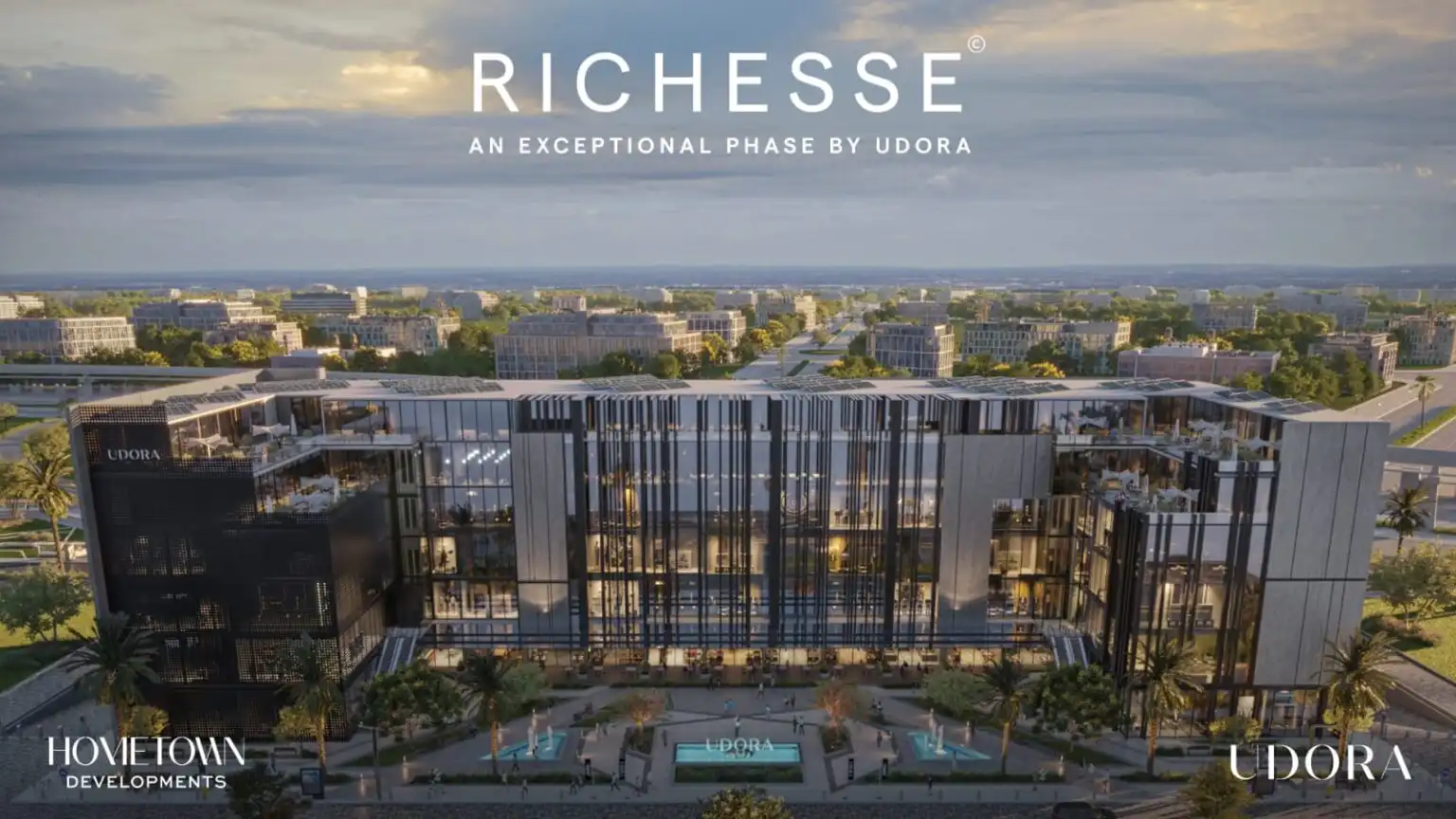
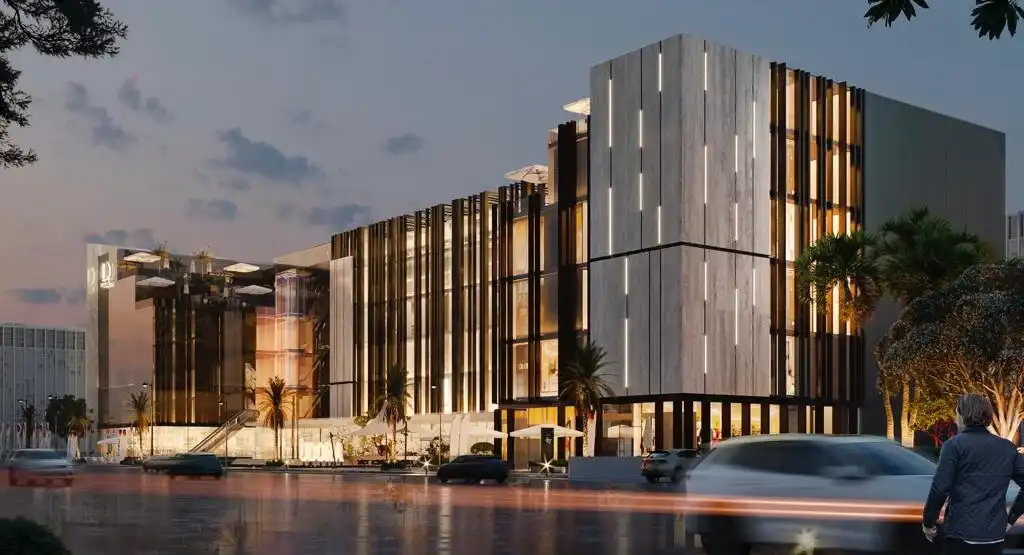
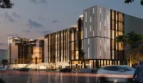
The design follows a contemporary glass-facade approach. The exterior is mostly glass, which lets in natural light and gives the building a modern appearance.
Richesse hometown has six levels total—a ground floor plus five upper floors. Ground-level spaces typically get the most visibility and foot traffic. Upper floors work better for destination businesses or tenants with established customer bases.
The developer of Richesse Hometown set aside a good chunk of the total area for green spaces and plazas rather than cramming in more units. The food court alone takes up 3,075 square meters, which tells you they’re betting on dining and social gathering as traffic drivers.
Inside, there are panoramic elevators, escalators, and separate freight elevators for moving goods. There’s also something called a Service Corridor—a back passage for staff and deliveries that keeps loading activity away from customer areas. That’s not common in Egyptian commercial projects, and it’s a practical detail that matters for day-to-day operations.
The parking garage in Richesse Hometown handles both visitor cars and delivery trucks, with dedicated unloading zones. If you’re running a retail operation that needs regular inventory deliveries, that setup makes logistics easier.
Unit Sizes and What’s Available
Everything here is commercial in Richesse Hometown New Capital. No offices, no residential—just retail and food service spaces.
Units start at 30 square meters. That’s small boutique or kiosk territory. Mid-range units between 60 and 120 square meters work for cafes, established retail brands, or service businesses. Anything above 120 square meters could fit a restaurant or a larger retail operation.
The developer of Richesse Hometown hasn’t published a full breakdown of how many units exist at each size, so you’ll need to ask for specifics. Location within the mall matters more than size in some cases—a corner unit or one facing a main corridor will perform better than an interior space on the fourth floor.
The all-commercial setup means the project lives or dies on visitor traffic. There’s no residential component to provide a built-in customer base, and no offices to generate weekday lunch crowds beyond what the surrounding district provides.
What’s Included in the Project?
Richesse hometown comes with several operational features that affect how the building functions and what tenants can expect.
The food court clusters multiple dining options in one area. That can drive traffic to nearby shops, but it also means restaurants are competing directly with each other for the same customers.
Smart building systems handle lighting, temperature control, and fire safety. These reduce operational costs and keep conditions consistent across the property.
Security in Richesse Hometown includes cameras throughout the building and a professional security team. For retail tenants, that coverage protects inventory and creates a safer environment for staff.
High-speed internet is included across all units, so tenants don’t need to arrange separate installations. There are also meeting rooms available for tenant use, which helps if you need space for training or client meetings.
Richesse Hometown New Capital runs on solar energy with backup generators for when the grid has issues. That dual approach addresses Egypt’s occasional power problems and cuts long-term electricity costs.
The Service Corridor is worth noting again. By keeping goods movement separate from customer areas, the design maintains a cleaner presentation and reduces congestion when deliveries arrive during business hours.
What It Costs and How Payment Works?
- Commercial meter prices start at 100,000 EGP. That’s the baseline—actual prices vary based on unit size, floor level, and position within the mall.
- A 60-square-meter unit at starting price would run 6,000,000 EGP. A 120-square-meter space would cost 12,000,000 EGP before any location premiums.
- The payment plan requires 20% down with the remaining 80% spread over six years. For a 6,000,000 EGP unit, that’s 1,200,000 EGP upfront and roughly 66,667 EGP monthly for 72 months.
That structure makes the purchase more accessible if you don’t want to commit full capital immediately. But you should confirm whether those monthly payments include interest or administrative fees, because that changes your total cost.
The six-year payment period is longer than the typical three-to-five-year plans you see elsewhere. That reduces monthly pressure but extends your financial commitment.
What to Think About Before Buying?
Buying a commercial unit in Richesse hometown involves several practical considerations beyond the price tag.
- Location logic: The downtown district is the government’s planned commercial hub. If the capital develops as intended, this area should see consistent activity. But the capital’s current population is still limited compared to established Cairo neighborhoods, which affects near-term traffic potential.
- Competition: Packing multiple malls into one district creates competition. Tenants need to differentiate their offerings or compete on price. Established brands with existing recognition have an advantage here.
- Timeline: Richesse Hometown New Capital targets 2028 delivery. That’s four years away, meaning you’re committing money now for returns that start years later. A lot can change in that time—economically and in terms of the capital’s development pace.
- Rental potential: If you’re buying to rent out, your yield depends on rental rates, occupancy levels, and operating costs. The downtown location suggests potential for reasonable rates, but actual performance depends on how quickly the district matures and whether tenant demand materializes.
- Resale reality: Commercial property in Richesse Hometown typically takes longer to resell than residential, and success depends heavily on market conditions and how well the property performs. This should be viewed as a medium-to-long-term commitment, not a quick flip.
- Management needs: Commercial units usually require more active management than residential property. Tenant relations, maintenance coordination, and market positioning demand attention—either yours or a property manager’s.
Who’s Behind Richesse Hometown New Capital?
Hometown Real Estate Development started in 2017. They began with a 30-building residential project in the Fifth Settlement, then moved into commercial development.
Their portfolio includes several New Capital projects beside Richesse hometown:
- Yodora Mall (Richesse is a phase of this)
- Zaha Park Mall
- Lafayette Mall
In the Fifth Settlement, they’ve developed Al Narges Residence Compound and Beit Al Watan Compound.
The company’s relatively recent establishment means there’s less long-term track record compared to developers who’ve been around for decades. But multiple ongoing projects suggest they have financial backing and market access.
If you’re considering buying, it’s worth researching their delivery timelines on completed projects and talking to existing clients about responsiveness and after-sales service.
How This Compares to Other Options?
Investors looking at Richesse hometown should weigh it against other commercial opportunities available now.
- Other New Capital commercial projects: Several developers are offering downtown commercial units with similar payment structures. Comparing per-meter prices, delivery dates, and developer reputations helps identify relative value.
- Fifth Settlement and New Cairo retail: These areas have established populations and proven foot traffic. Prices may be higher, but rental demand is more predictable. The trade-off is lower growth potential compared to betting on the capital’s expansion.
- North Coast commercial: Seasonal markets operate differently—high summer traffic, slow winters. That suits specific business models but requires a different operational approach.
- Mixed-use developments: Some projects combine commercial, office, and residential spaces. The mix can create a built-in customer base but may dilute commercial focus.
Frequently Asked Questions About Richesse Hometown
What actually sets Richesse Hometown apart from other New Capital malls?
The downtown entrance location and six-year payment plan are the main differentiators. The Service Corridor concept—separating goods movement from customer areas—is uncommon in Egyptian commercial developments. The developer also allocated significant space to the food court and green areas rather than maximizing built density.
It’s positioned as a practical option for investors wanting commercial space in the planned business district, with payment flexibility as the key selling point.
How does the six-year payment plan work in practice?
You pay 20% upfront, then spread the remaining 80% over 72 months. For a 6,000,000 EGP unit, that’s 1,200,000 EGP down and roughly 66,667 EGP monthly. Confirm with the developer whether installments include interest or fees—that detail significantly affects total cost. The extended timeline reduces monthly pressure but commits you to a longer obligation period. Get a detailed payment schedule in writing before signing anything.
Is the location actually accessible for customer traffic?
The downtown district sits centrally with connections to major roads and a planned monorail station. But accessibility depends on the capital’s population growth and infrastructure completion. Currently, residential occupancy is limited compared to established Cairo districts, which affects immediate foot traffic.
The location’s value increases as government offices relocate and residential compounds fill. This is a medium-term proposition, not an immediate high-traffic situation. Success depends on the government’s continued commitment to developing the capital.
What types of businesses work best in Richesse Hometown?
Established retail brands with existing customer recognition tend to perform well in new mall environments. Food and beverage concepts benefit from the large food court and the capital’s current shortage of dining options. Service providers targeting government employees—tailoring, dry cleaning, phone repair—could find steady demand.
Specialty shops offering products not readily available in the capital may attract customers willing to travel. Businesses requiring high immediate foot traffic or impulse purchases face more challenges until the district matures. Match your business model to the current and projected customer base.
What are realistic rental yields for commercial units here?
Hard to predict with precision given the area’s early development stage. Established Cairo commercial districts typically see annual yields between 6-10% depending on location and quality. New Capital properties might achieve similar or slightly higher yields if the district develops as planned, but that assumes finding tenants at market rates and maintaining reasonable occupancy.
Model conservative scenarios—lower rental rates initially with gradual increases as the area matures. Factor in maintenance costs, property management fees, and potential vacancy periods. Commercial property requires more active management than residential, which affects net returns.
Richesse hometown offers commercial space in the New Capital’s planned downtown district. The project combines a central location with flexible payment terms and operational features designed to support retail and food service tenants.
The six-year payment plan makes the purchase more accessible for investors who prefer spreading capital commitment over time. Unit sizes starting at 30 square meters accommodate various business scales.
But practical considerations matter. The capital’s success depends on continued government commitment, population growth, and infrastructure completion. The downtown district’s concentration of commercial projects creates competition that will favor well-differentiated concepts and established brands.
Approach this with realistic expectations about timelines and market development. The 2028 delivery date means a four-year wait before operations begin, during which economic conditions and district development will evolve. Comparing Richesse hometown to alternatives in established areas helps clarify whether the growth potential justifies the uncertainty.
For those comfortable with medium-term investment horizons and the capital’s development trajectory, this presents a structured entry point into commercial real estate. The key is matching your investment capacity, risk tolerance, and business goals with the project’s actual characteristics rather than projected potential.
Similar Listings
The Walk Mall New Capital | Commercial U...
Blue Sky Mall New Capital | Over Look at...
Vida Business Complex | Commercial Space...