



Description
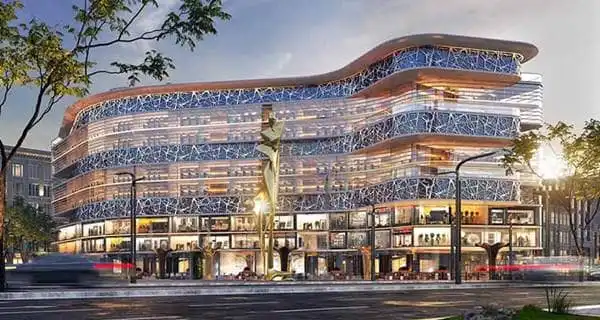
The New Administrative Capital has drawn plenty of attention from investors looking at Egypt’s newest urban center. Lafayette Mall, developed by Hometown Developments, entered the market as one of the first projects in the Downtown district built exclusively for commercial use—no residential towers, no hotel floors, just retail and office space across six levels.
The project sits on 25,000 square meters near Al Masa Hotel and the Monorail station. Units range from roughly 26 to 150 square meters, with pricing that starts around 70,000 EGP per square meter for ground-floor spaces and drops for upper floors. The developer offers payment plans stretching up to 10 years, which makes entry more accessible but also reflects the longer timeline needed for the area to mature.
This guide walks through what Lafayette actually offers, who might find it useful, and what to watch out for before committing.
Where Lafayette Mall Sits in Downtown New Capital?
Lafayette Mall occupies a corner plot in the first phase of Downtown, the mixed-use zone planned for retail, dining, and entertainment. The location has three street frontages, which improves visibility compared to mid-block sites.
The Monorail Central Station is about a one-minute walk away. Once fully operational, this line will connect Downtown to residential districts and eventually link into Cairo’s broader transit network. The government district—where ministries and administrative offices are clustered—is also close by, potentially bringing weekday foot traffic from civil servants and visitors.
Other nearby landmarks include the Green River park (roughly three minutes by car), the Opera House site, and the Exhibition Grounds. The Regional Ring Road connects the New Capital to Cairo, Suez, and other areas within a few minutes’ drive.
Lafayette Mall New Capital faces Al Masa Hotel and sits near the planned dancing fountain area, part of a pedestrian corridor meant to attract residents and tourists. Whether that corridor actually generates consistent foot traffic depends on how quickly surrounding residential and hospitality projects get completed and occupied.
For investors, the location offers proximity to demand sources—government employees, hotel guests, future residents—but returns will depend on how fast the broader Downtown area fills in.
What’s Inside: Unit Types and Sizes
Lafayette Mall New Capital was designed exclusively for commercial use. The project holds approximately 850 commercial units across six floors, accessible through nine separate entrances.
Ground-level spaces typically run from 160 to 175 square meters, suitable for retail stores, cafes, or showrooms that benefit from street visibility.
First-floor units in Lafayette Mall measure between 130 and 140 square meters, while second-floor spaces range from 125 to 130 square meters. These mid-levels often work for offices, clinics, or service providers who don’t rely as heavily on passing foot traffic.
Upper floors offer smaller units. Third-floor spaces range from 120 to 130 square meters, fourth-floor units from 90 to 105 square meters, and fifth-floor units from 70 to 95 square meters. These upper levels might suit professional offices, training centers, or back-office operations.
The variety in Lafayette Mall New Capital lets buyers match space to their business model. A boutique retailer might choose a 30-square-meter ground-floor unit, while a medical clinic could opt for a 100-square-meter space on an upper floor with dedicated elevator access.
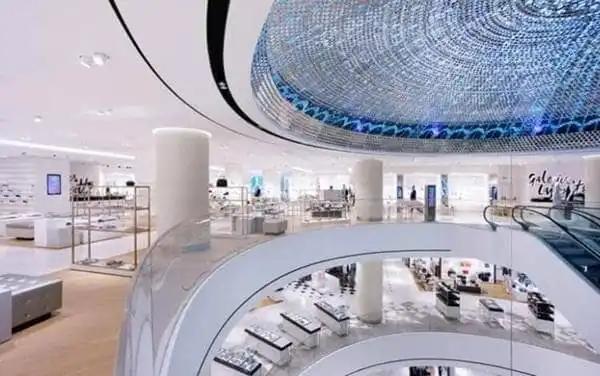
Each floor has been designated for specific activities. The ground floor includes entertainment facilities like bowling and ice skating. The third and fourth floors are planned as a food court. This vertical segmentation separates different types of businesses and customer flows, though it also means not all floors will see the same level of traffic.
Pricing and How It Compares
Pricing in Lafayette Mall New Capital varies by floor and unit size. Ground-floor units start around 70,000 EGP per square meter, decreasing for higher floors. A 50-square-meter ground-floor unit would run approximately 3.5 million EGP, while a similar-sized fifth-floor unit might start closer to 2.5 million EGP.
These figures put Lafayette Mall in the mid-to-upper range for commercial real estate in the New Capital. Comparable projects in Downtown—Solas Mall, Business Park Mall—offer similar pricing, though individual deals depend on payment terms, delivery dates, and specific location within each project.
Resale prices for early buyers have reportedly started around 12.3 million EGP for larger units, though resale activity remains limited given the project’s relatively recent launch and the broader market’s reliance on off-plan sales.
Investors should compare the per-square-meter cost against expected rental yields. Ground-floor retail in high-traffic areas of the New Capital has commanded monthly rents of 150 to 300 EGP per square meter, though these figures fluctuate based on tenant type, lease length, and fit-out responsibilities. Upper-floor offices typically rent for less, often between 80 and 150 EGP per square meter monthly.
The question for buyers is whether Lafayette’s location and amenities will support rental rates that justify the purchase price. Early-stage projects carry higher risk but also potential for appreciation as the district matures.
Payment Plans: What’s Available
Hometown Developments offers multiple payment structures in Lafayette Mall to accommodate different buyer profiles. The most flexible plan requires a 5% down payment with the balance spread over 10 years in unequal installments. This structure appeals to investors with limited upfront capital but confidence in long-term rental income.
Other available plans include:
- 10% down payment with a 5% discount, balance over 10 years
- 15% down payment with a 7% discount, balance over 9 years
- 20% down payment with a 10% discount, balance over 8 years
- 40% down payment with a 15% discount, balance over 7 years
- 50% down payment with a larger discount, balance over 6 years
The discount structure rewards higher down payments, which can reduce total cost by 10% to 15% for buyers able to pay 40% or more upfront. However, investors should calculate whether the discount outweighs the opportunity cost of tying up capital versus investing elsewhere.
Interest-free installment plans are standard in Egyptian real estate, but buyers should confirm whether maintenance fees, service charges, or other costs begin before or after handover.
Lafayette Mall New Capital Amenities
Lafayette incorporates several entertainment and leisure features intended to attract visitors beyond typical shopping trips. The ground floor includes a bowling center operated by AMF and an ice skating rink, both designed to draw families and youth, particularly on weekends and evenings.
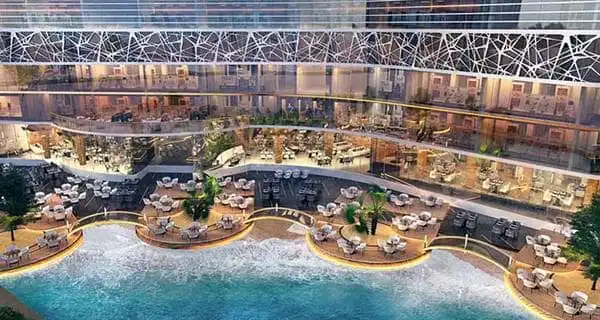
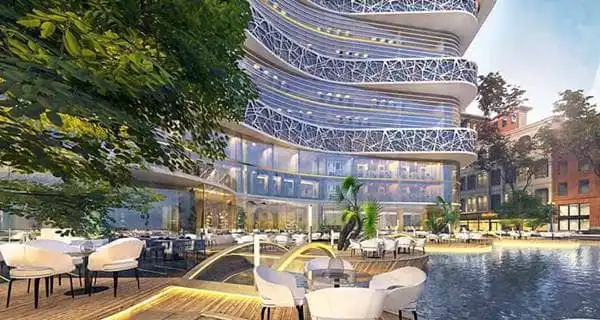
An artificial lake with a sandy beach area and water games occupies part of the outdoor space, along with a dancing fountain. These features aim to create a destination atmosphere rather than a purely transactional retail environment.
Upper floors house a food court with cafes and restaurants overlooking Al Masa Hotel, an IMAX cinema complex on the fourth and fifth floors, and a children’s play area on the second floor. The fifth floor also includes shops selling traditional Egyptian crafts and souvenirs, targeting tourists and residents interested in local products.
Lafayette Mall New Capital includes green spaces and landscaped areas, though the proportion of built-up area to open space is typical for commercial malls—most of the 25,000 square meters is occupied by buildings.
Security features include electronic gates, 24-hour security personnel, and digital surveillance cameras. These are standard for commercial developments in the New Capital but worth confirming during site visits.
For unit owners, the value of these amenities depends on whether they generate consistent foot traffic. Entertainment facilities can drive weekend visits, but weekday traffic—crucial for most businesses—relies more on proximity to offices and residential areas.
About the Developer: Hometown Developments
Hometown Developments entered Egypt’s real estate market in 2017, founded by engineer Diaa El-Din Farag Khalil. The company started with a capital base of 250 million EGP, which increased to 600 million EGP by 2018. Besides real estate, the company has interests in textiles and import-export, operating a factory in an industrial zone with over 5,000 employees.
In real estate, Hometown has completed approximately 15 projects, primarily in New Cairo and the Fifth Settlement, before moving into the New Capital. Previous developments include Zahra Park Mall in the New Capital and a collection of villas in New Cairo’s mini-compound projects.
Lafayette Mall represents the company’s largest commercial project to date, with total investments reported at around 3 billion EGP. The project was developed in phases, with early units marketed starting in 2019 and construction progressing through 2022.
For buyers, the developer’s track record matters. Hometown is a smaller player compared to giants like Palm Hills or Emaar, which means less brand recognition but potentially more flexible negotiation on pricing and payment terms. Buyers should verify the company’s financial stability, construction progress, and delivery history before committing.
Who Lafayette Mall New Capital Suits?
Lafayette Mall works for several investor and business owner profiles, though it’s not a fit for everyone.
Retail business owners looking to establish a presence in the New Capital’s Downtown area may find ground-floor units attractive, especially if they operate brands that benefit from mall foot traffic—fashion, electronics, cosmetics, or quick-service food.
Medical professionals considering clinics or diagnostic centers might prefer upper-floor units with dedicated elevator access, particularly if they target government employees or residents of nearby compounds.
Food and beverage operators could benefit from the food court floors, though they should assess whether the mall’s entertainment features will drive sufficient evening and weekend traffic to justify rent or purchase costs.
Investors seeking rental income might view Lafayette Mall as a long-term play, banking on the New Capital’s population growth and Downtown’s maturation. However, rental yields in the first few years may be lower than established areas of Cairo until occupancy and foot traffic stabilize.
Speculative buyers hoping for quick resale gains face higher risk. The New Capital’s real estate market has seen price appreciation in some projects, but liquidity remains limited, and resale depends on finding buyers willing to pay a premium over developer prices.
Lafayette Mall New Capital is less suitable for businesses requiring ground-level parking for heavy customer flow or those needing large, customizable spaces exceeding 150 square meters.
How Lafayette Compares to Other Downtown Malls?
Several commercial projects compete with Lafayette Mall in the Downtown district, each with different positioning.
Solas Mall offers a larger footprint with over 600 retail units and emphasizes luxury brands and upscale dining. It targets higher-income shoppers and international retailers, with correspondingly higher unit prices.
Business Park Mall focuses on a mix of retail and office space, appealing to corporate tenants and professional services. Its location near the business district gives it an edge for weekday traffic.
Citadel Mall provides mid-market retail with ample parking, targeting families and everyday shopping needs rather than entertainment or luxury.
Inizio Mall combines retail with a gym and children’s entertainment, similar to Lafayette’s mixed-use approach but with a stronger emphasis on fitness and wellness.
Lafayette’s main differentiators are its French-inspired design concept, the concentration of entertainment facilities (bowling, skating, cinema), and the relatively flexible payment plans offered by Hometown Developments. However, it competes in a crowded market where success depends on execution, tenant mix, and the pace of Downtown’s overall development.
Investors should visit multiple projects, compare per-square-meter costs, assess construction quality, and evaluate each developer’s reputation before deciding.
What to Check Before Buying?
Before committing to a unit in Lafayette Mall New Capital, buyers should take several practical steps.
- Verify delivery dates and construction progress. Visit the site to assess how much work remains and whether the timeline seems realistic. Delays are common in large-scale developments, and late delivery affects rental income projections.
- Understand total cost of ownership. Beyond the purchase price, factor in registration fees (typically 2.5% of the property value), maintenance charges, utilities, and any service fees imposed by the mall’s management.
- Review the sales contract carefully. Confirm payment schedules, penalties for late installments, handover conditions, and what happens if the developer delays delivery. Consider having a lawyer review the contract before signing.
- Assess tenant demand. Research what types of businesses are succeeding in the New Capital. Talk to brokers, visit existing malls, and gauge whether your target tenant profile (retail, office, clinic) has genuine demand in the area.
- Plan for vacancy periods. Even in prime locations, commercial units can sit empty for months while searching for the right tenant. Budget for at least six months of carrying costs without rental income.
Frequently Asked Questions
What makes Lafayette Mall different from other commercial projects in the New Capital?
Lafayette Mall New Capital was designed exclusively for commercial units, with no residential or hotel components. It incorporates entertainment facilities like bowling, ice skating, and an IMAX cinema, aiming to function as both a shopping destination and a leisure hub.
Lafayette Mall New Capital location in front of Al Masa Hotel and near the Monorail station provides accessibility, while the French-inspired design concept differentiates it aesthetically from other malls. Success depends on how quickly the surrounding Downtown area develops and attracts residents and visitors.
Are the payment plans genuinely interest-free, and what should I know?
Yes, the installment plans offered by Hometown Developments are interest-free, which is standard practice in Egypt’s real estate market. Unit prices are typically higher than cash prices to compensate for deferred payments. Buyers who pay larger down payments receive discounts—up to 15% for 40% down—which effectively reduces the total cost. Buyers should confirm whether maintenance fees or service charges begin before handover, as these can add to carrying costs during the construction period.
What rental yields can investors realistically expect?
Rental yields depend on floor level, unit size, and tenant type. Ground-floor retail in high-traffic areas of the New Capital has achieved monthly rents of 150 to 300 EGP per square meter, translating to annual yields of roughly 5% to 8% based on current purchase prices.
Upper-floor offices typically rent for less—80 to 150 EGP per square meter monthly—yielding around 4% to 6% annually. These figures assume full occupancy, which may take time in a developing area. Investors should budget for vacancy periods and lower initial rents while the district matures.
How does Lafayette’s location compare to other parts of the New Capital?
Lafayette Mall Downtown location offers proximity to government offices, the Monorail station, and planned residential neighborhoods, which could drive consistent foot traffic. However, it competes with multiple other malls in the same district, and success depends on tenant mix and management.
Commercial units near the business district may attract more corporate tenants but less retail traffic. The residential districts offer neighborhood retail opportunities with potentially more stable, everyday demand but lower visibility. Each location suits different business models.
Conclusion
Lafayette Mall New Capital represents a calculated bet on the Downtown district becoming a viable commercial and entertainment hub. The project offers flexibility in unit sizes, accessible payment plans, and a location near key infrastructure like the Monorail and government district. The entertainment amenities—bowling, skating, cinema—aim to create a destination beyond typical retail, which could drive weekend traffic and differentiate the mall from competitors.
Success is far from guaranteed. The New Capital’s development timeline has proven longer than many early projections, and the Downtown area still lacks the residential density needed to support multiple large malls. Buyers should approach Lafayette Mall as a medium- to long-term investment, prepared for vacancy periods and modest initial returns while the district matures.
For business owners planning to operate in the New Capital, Lafayette Mall offers a practical entry point with manageable unit sizes and flexible financing. For investors, it requires careful due diligence—verifying construction progress, assessing tenant demand, and comparing costs against realistic rental projections. The opportunity exists, but so do the risks typical of any emerging market investment.
Similar Listings
Tycoon Tower New Capital | What You Need...
Mardev Plaza New Capital | Commercial In...
Mall Norm New Capital | Commercial Units...