



Description
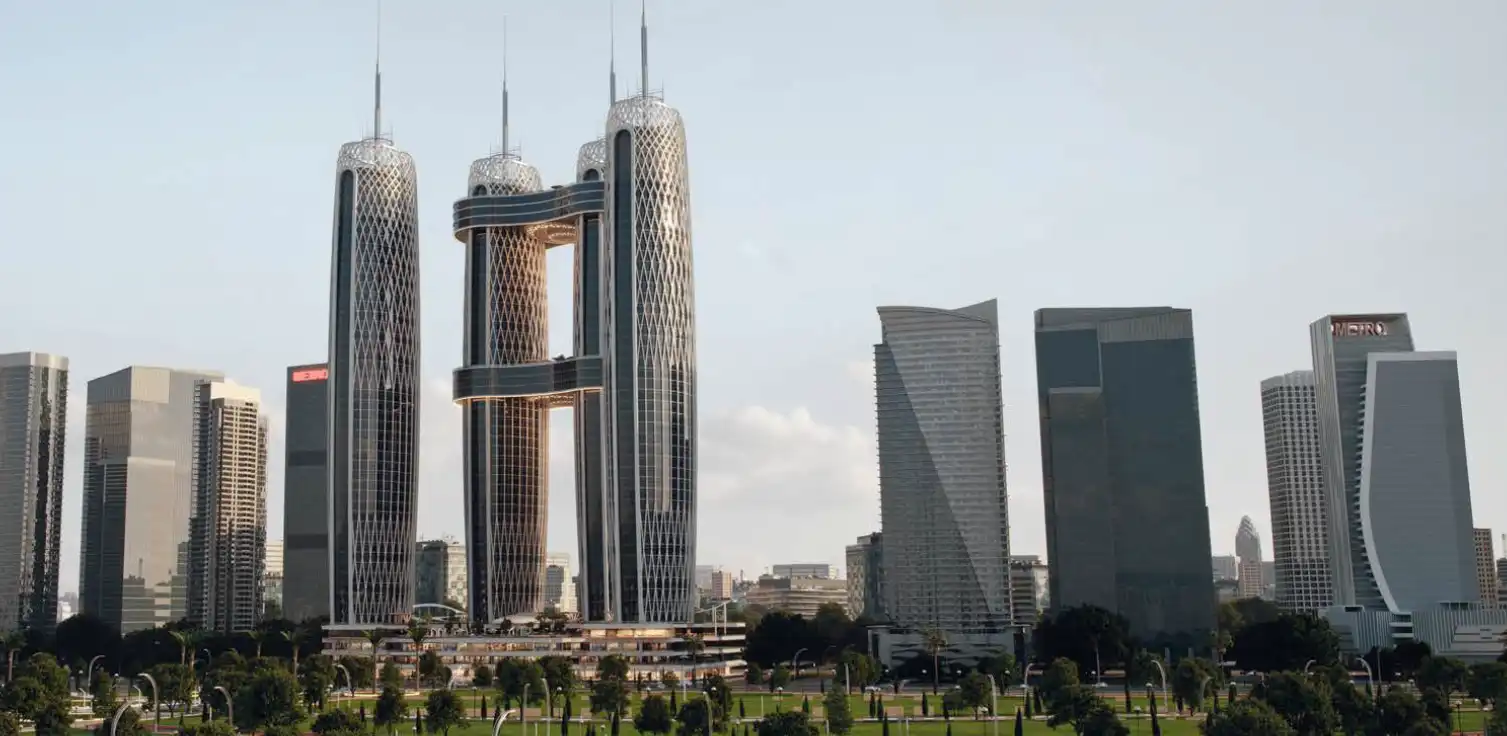
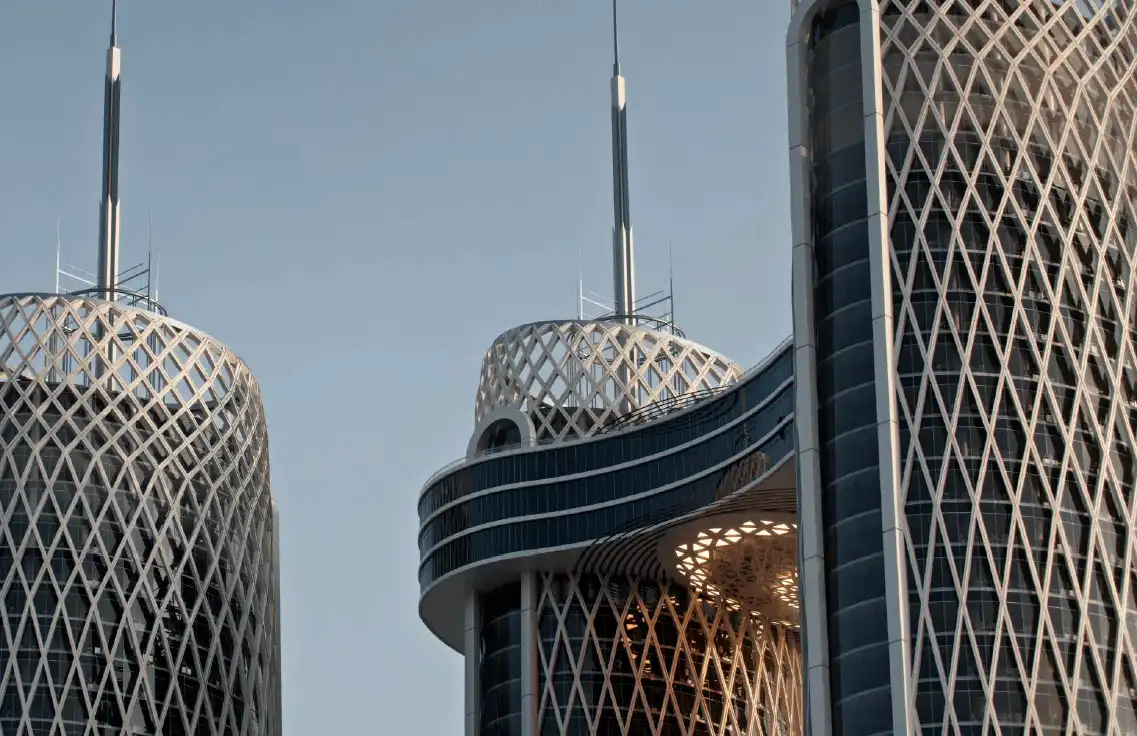
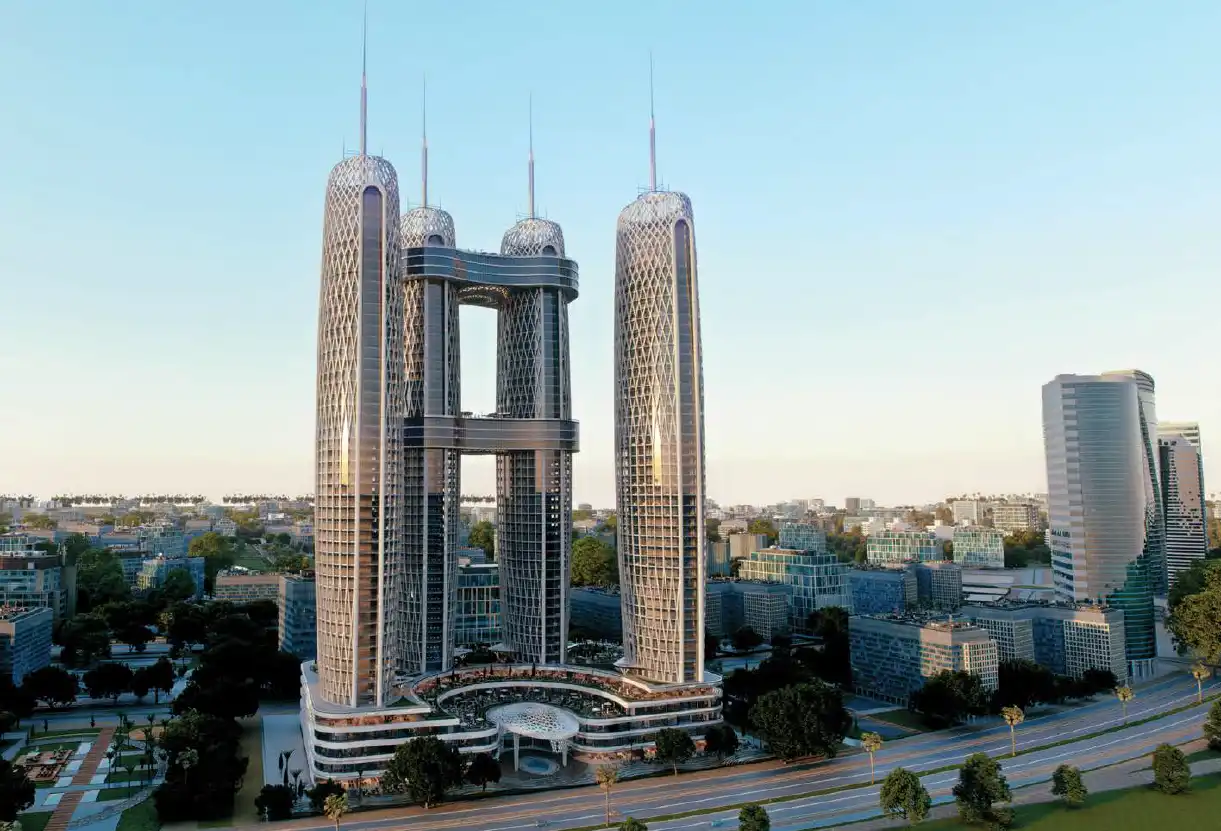
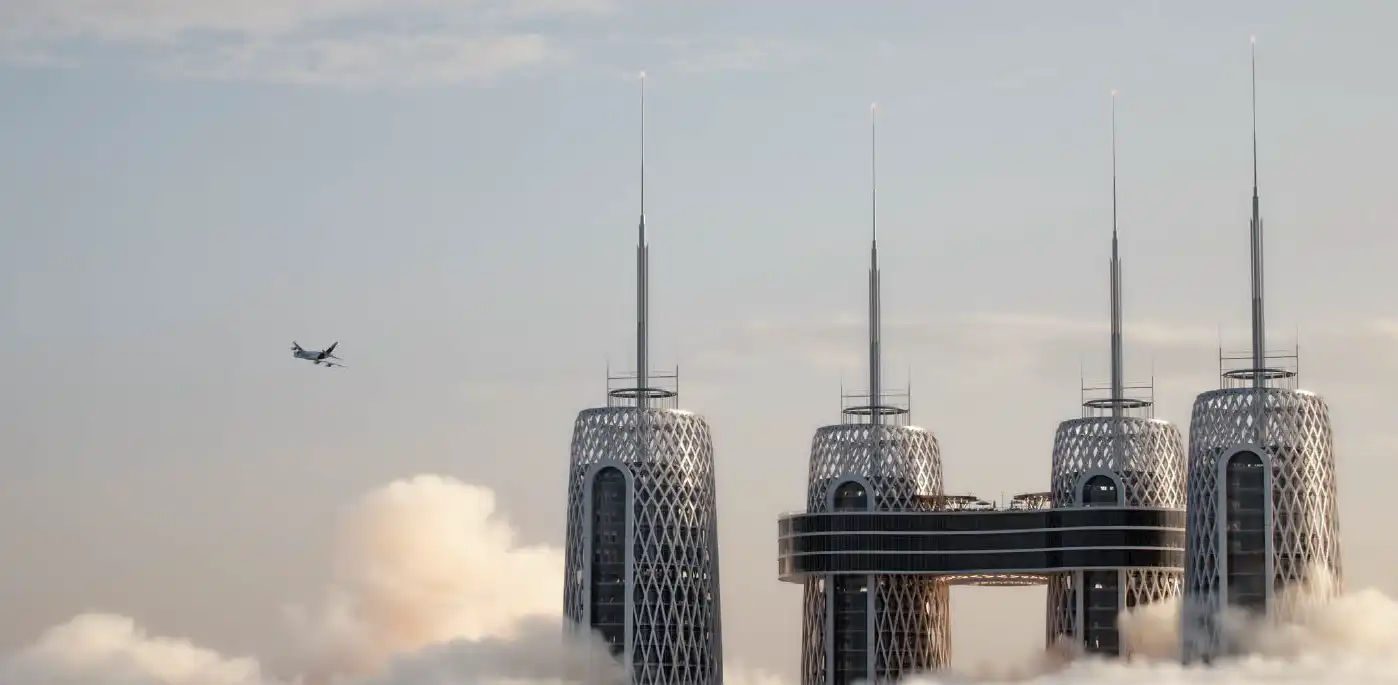
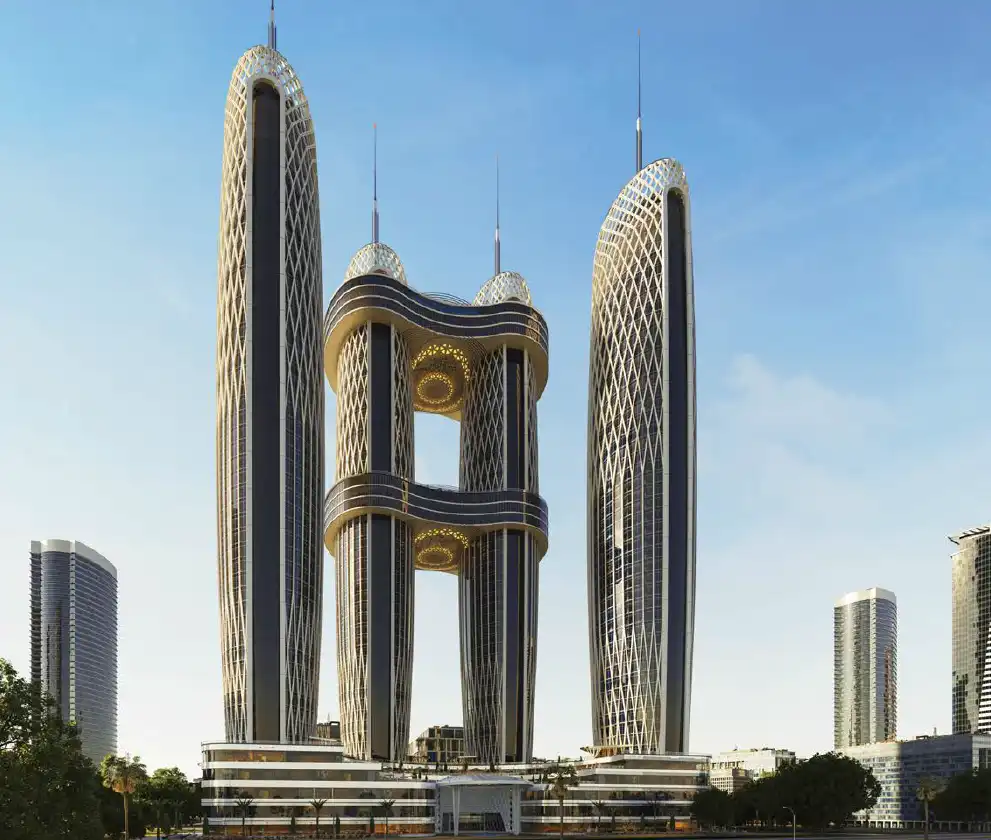
When you’re evaluating commercial projects in Egypt’s New Administrative Capital, height matters—not for bragging rights, but for visibility and positioning. Nile Business City rises 233 meters above the Downtown area, making it the second-tallest structure in the capital after the Iconic Tower. Developed by Nile Developments, this isn’t a mixed-use compound trying to be a mini-city. It’s a vertical business tower designed for one purpose: providing functional space for companies, medical practices, retail operations, and business travelers.
Nile Business City New Capital sits on 7.8 acres in plot MU23, directly along Mohammed Bin Zayed Axis with a 200-meter façade facing the Green River. The built-up area reaches 296,000 square meters across 56 floors—larger than the Iconic Tower’s total construction footprint. The tower includes commercial shops, administrative offices, medical clinics, and hotel apartments, each occupying designated floors based on function.
This is a working building in a business district. If you’re looking for residential compounds with schools and parks, this isn’t it. But if you need office space near government ministries, a medical clinic positioned for the capital’s growing population, or a retail presence in the Downtown core, the location and infrastructure deliver what matters.
Where Nile Business City Actually Sits?
Location claims in real estate often stretch reality. Here’s what’s verifiable: Nile Business City New Capital occupies plot MU23 in the Downtown district, positioned between the Green River to the north and the central business core to the south.
The tower’s northern façade runs 200 meters along Mohammed Bin Zayed Axis, one of the capital’s primary roads. This axis connects directly to the Ring Road and provides straight-line access to New Cairo’s eastern districts. The drive from New Cairo takes roughly 20 minutes when traffic cooperates.
Three main routes serve the area: Road 90 from the north, Suez Road from the east, and Sokhna Road from the southeast. The Monorail station sits within reasonable walking distance, though “walkable” in the New Capital means something different than in established Cairo neighborhoods. The planned high-speed rail stop will be a short drive once operational.
The Grand Mosque, Grand Cathedral, and Presidential Palace are all within a 5-minute drive. The Government District, Financial District, and Diplomatic Quarter sit similarly close. Al Masa Hotel is nearby, and the conference center is just down the road.
This positioning places businesses at the center of administrative activity. If your company deals with government contracts, serves diplomatic clients, or operates in financial services, the location makes practical sense. You’re not fighting Cairo traffic to reach ministry offices or embassy meetings.
What the Nile Business City New Capital Actually Includes?
Nile Business City New Capital is a single tower structure rising 56 floors above ground. The building includes three podium levels at the base, 50 upper floors for commercial and professional use, and a five-story underground garage holding 5,000 vehicles.
The ground floor in Nile Business City through the fourth floor house commercial units—shops, restaurants, cafes, and service outlets. Everything above that contains administrative offices, medical clinics, and hotel apartments. This vertical separation keeps retail activity at street level while placing professional spaces higher up with better views.
The building’s 200-meter façade creates substantial street presence. Floor-to-ceiling windows on upper levels provide sightlines across the Green River and surrounding districts. The northern and eastern faces offer the clearest views, though what you’re looking at depends on how quickly the surrounding area develops.
The 296,000 square meters of built-up area makes this one of the larger single-structure projects in the New Capital. That’s roughly equivalent to 70 acres of horizontal construction compressed vertically.
Nile Business City includes 40 elevators—16 per section—plus escalators connecting the lower commercial floors. Central air conditioning runs throughout, and high-speed internet infrastructure is built into the structure. These aren’t add-ons; they’re base building systems.
Nile Developments engaged Canadian architectural consultants who’ve worked on Dubai tower projects, along with structural engineer Dr. Asaad Salameh, who has over 128 high-rise projects in the UAE and Saudi Arabia on his record. The Egyptian firm ARCHRETE handled the architectural review. The developer invested over 1.2 billion EGP pursuing LEED certification for energy efficiency and environmental design.
Unit Types, Sizes, and Pricing Structure
Commercial shops on the lower floors in Nile Business City start at 40 square meters. Administrative offices begin at 47 square meters for self-operated units and 51 square meters for partnership arrangements. Medical clinics have layouts sized for consultation rooms, waiting areas, and small procedure spaces. Hotel apartments range from studios to three-bedroom units starting at 62 square meters.
Pricing varies by floor height, view quality, and operating model. Administrative units start around 119,000 EGP per square meter. Commercial units begin at approximately 225,000 EGP per square meter, reflecting their ground-floor positioning and retail potential.
The developer offers several operating models beyond straight purchase in Nile Business City New Capital:
- Partnership arrangements let you buy 50% or 100% of a unit while Nile Developments handles leasing and management in exchange for a percentage of rental income. The 50% partnership means you pay for half the unit, the company manages everything, and you split rental proceeds. The 100% partnership gives you full ownership while the company still handles operations for a management fee.
- Guaranteed return options provide rental income even during vacancy periods. If the unit doesn’t lease within one to three months, the company covers the gap. This shifts vacancy risk from buyer to developer, though the terms and percentages matter significantly in determining actual returns.
- Hotel units follow a different structure entirely. You can purchase 25%, 50%, or 100% of a unit, with Nile Developments managing all operations through an international hotel operator. Returns come from room revenue, distributed according to ownership percentage. The hotel operator handles bookings, maintenance, housekeeping, and guest services. Owners receive quarterly statements and annual distributions.
Pricing for hotel units in Nile Business City starts around 5.5 million EGP for a 25% share in a studio, scaling up to 22 million EGP for full ownership of larger apartments. The developer offered early-booking discounts—12% in the first week, 9% in the second, 5% in the third—though those windows have closed.
Finishing levels differ by unit type. Commercial spaces come semi-finished, allowing tenants to customize interiors. Administrative units include full finishing, central AC, and basic fit-outs. Hotel apartments arrive fully furnished with appliances and climate control.
Nile Business City New Capital Services and Facilities
- The commercial mall spans 15,000 square meters across the lower floors. Corridors run wider than typical retail centers to handle foot traffic from the offices and hotel above in Nile Business City. Three main entrances serve the tower, each leading to separate elevator banks.
- An observation deck on the upper floors provides views across the capital. The building features what’s marketed as Africa’s tallest suspension walking track—a hanging walkway circling part of the structure’s exterior. Suspension restaurants on upper levels offer dining with panoramic views, though the novelty factor matters less than the food quality and service once the initial buzz fades.
- A cinema in Nile Business City occupies dedicated space within the complex. Conference halls with modern AV equipment are available for corporate events. VIP reception areas include private terraces and meeting rooms.
- The building operates with 24-hour security, CCTV coverage across all floors and common areas, and controlled access points. Fire suppression systems meet international standards, and emergency generators ensure continuous power during grid outages.
- Daily maintenance covers plumbing, electrical systems, HVAC, and cleaning. The developer contracted CFM Contract—an Orascom subsidiary—to manage facilities. KAD Commercial Property Management handles commercial unit operations and tenant relations. These aren’t small firms; they manage multiple large-scale projects.
- Solar panels supplement grid power, and smart building systems monitor energy consumption across floors in Nile Business City New Capital. Wastewater treatment allows for irrigation of surrounding green spaces. The LEED certification pursuit required meeting over 80 specific conditions related to energy efficiency, water conservation, and environmental impact.
Payment Plans That Actually Exist
Nile Developments structured several payment plans for Nile Business City New Capital. Here’s what’s currently available:
- 10% down payment with installments over 6 years
- 15% down payment with installments over 7 years
- 20% down payment with installments over 8 years
- 25% down payment with a 10% discount and installments over 7 years
- 35% down payment with a 20% discount and installments over 7 years
Cash buyers receive a 40% discount off list prices. The developer also introduced a “cache system” where cash buyers pay the full amount upfront and receive five post-dated checks totaling 75% of the purchase price. Effectively, you’re buying at a quarter of the listed cost if you have the liquidity.
The guarantee system in Nile Business City allows buyers to pay 15% down with annual installments that increase by 10% each year. This defers larger payments to later years when rental income may offset costs, assuming the unit leases as projected.
Interest-free installments apply across all plans. Delivery is scheduled for 2026, with phased handovers starting from the lower commercial floors. Whether that timeline holds depends on construction progress and the developer’s execution, though Nile Developments has completed over 160 projects since 2002.
Who Developed This and What’s Their Track Record?
Nile Developments has operated in Egypt’s real estate market since 2002, initially focusing on Mansoura in Dakahlia Governorate before expanding to Cairo in 2016. The company has completed over 160 projects across residential, commercial, and mixed-use categories.
Mohamed Taher chairs the company, bringing 25 years of experience in civil engineering and real estate development. He graduated from the Faculty of Civil Engineering at Mansoura University and has built a reputation for incorporating international construction practices into Egyptian projects.
Mahmoud Taher serves as executive director and sits on the board of the Real Estate Investment Division in the General Federation of Chambers of Commerce. He also holds positions as treasurer of the New Cairo Developers Association and the New Capital developers’ group.
Previous projects include Nile Boulevard in New Cairo, the 31N Commercial Tower in the New Capital, and residential developments in Rehab City and Beit Al Watan. The company’s portfolio shows a pattern of mid-to-large-scale projects in established and emerging districts.
Total investments in the New Capital reportedly exceed 290 billion EGP across multiple projects. Nile Business City represents the company’s largest single development in the area and their most ambitious vertical project to date.
Who Nile Business City New Capital Actually Suits?
Nile Business City works for specific buyer types, not everyone.
- Business owners establishing a New Capital presence will find the location and infrastructure practical. Law firms, consultancies, financial advisors, and corporate service providers can operate from professional office spaces near government clients. The address carries weight, and the proximity to ministries reduces travel time for meetings and contract work.
- Medical professionals opening clinics benefit from dedicated medical floors and proximity to residential compounds where patients will eventually live. The New Capital’s population is growing, and early-positioned medical practices will capture patients as the area fills in. However, patient volume will build gradually, not overnight.
- Retail operators gain from ground-floor visibility and access to office workers and hotel guests above in Nile Business City. The 15,000-square-meter mall provides space for diverse retail concepts, though foot traffic depends on how quickly the surrounding area develops and how many people actually work in the tower daily.
- Investors seeking rental income without active management may find the partnership and guarantee models appealing. Returns depend on actual leasing performance and the developer’s ability to maintain occupancy. The guaranteed return shifts vacancy risk, but the terms and management fees significantly impact net returns.
- Hotel unit investors suit those comfortable with hospitality sector dynamics and willing to accept returns tied to room rates and occupancy levels. This carries more risk than fixed-return instruments but potentially higher yields during peak seasons. The New Capital’s hotel market is still establishing itself, so early years may show volatility.
Nile Business City New Capital doesn’t suit buyers looking for residential apartments or family-oriented communities. It’s a commercial tower in a business district, not a residential compound with schools, parks, and family amenities.
Practical Considerations You Should Think Through
The New Capital remains under development. Major roads and landmarks are operational, but surrounding districts continue to fill in. Population density is lower than mature Cairo neighborhoods, which affects foot traffic and customer flow for retail businesses.
Transportation infrastructure is improving. The Monorail connects to East Cairo, and the high-speed rail will eventually link to other cities. However, most people still rely on private cars, and traffic patterns remain unpredictable as the city grows. The capital’s road network handles current volume, but future congestion depends on how quickly population and business activity increase.
Nile Business City New Capital height and visibility create strong branding potential. Companies operating from Nile Business City can leverage the address and the building’s prominence in marketing materials. Whether that translates to actual business value depends on your specific industry and client base. Some clients care about prestigious addresses; others don’t.
Maintenance fees, service charges, and partnership percentages will affect net returns for investors. The developer’s track record and the management companies’ performance will determine how well the building operates over time. Ask for detailed breakdowns of ongoing costs, management fee structures, and what’s included versus what costs extra.
Frequently Asked Questions
What’s the actual delivery timeline?
The developer set 2026 as the target delivery year, with phased handovers starting from lower floors. Commercial units on the ground level will likely hand over first, followed by administrative floors, then hotel sections. Delays happen in large-scale projects, so build buffer time into your business plans. Nile Developments’ previous projects provide some track record for evaluating delivery reliability.
How do ongoing costs break down?
Buyers pay annual maintenance fees covering building operations, security, cleaning, and common area upkeep. Service charges for utilities, AC, and internet add to monthly expenses. Partnership models deduct management fees—typically 20%—from rental income before distribution. Hotel unit owners pay a percentage to the operating company. Property taxes apply based on unit value and use. Get detailed cost projections before committing.
How does this compare to other New Capital towers?
Nile Business City ranks second in height after the Iconic Tower, giving it strong visibility. Its 296,000 square meter built-up area exceeds most competing projects. The location on Mohammed Bin Zayed Axis and Green River frontage provides better access than towers set further back. However, projects closer to the Government District or Monorail stations may offer advantages for specific business types. The comparison depends on your priorities—height and visibility versus proximity to specific landmarks.
Is the location practical for business operations now?
The New Capital’s viability depends on your business model and client base. If you serve government agencies, the location makes sense as ministries continue relocating. International companies and diplomatic clients are establishing presence, creating demand for professional services. However, consumer-facing businesses may struggle with lower foot traffic compared to established Cairo districts. The market is early-stage, which means opportunity for first movers but also uncertainty about growth timelines.
What happens if the unit doesn’t lease?
Under the guaranteed return model, the developer covers rental payments if the unit doesn’t lease within one to three months. You receive income regardless of occupancy, though the guarantee terms specify the percentage covered and the duration. Read the contract carefully—guarantees have conditions, time limits, and circumstances where they don’t apply.
Can you visit the tower before buying?
The project is under construction, so site visits show the building’s progress rather than finished units. The developer maintains a sales office where you can review floor plans, finishes, and unit specifications. Previous completed projects by Nile Developments provide examples of their construction quality and finishing standards.
What Nile Business City New Capital Actually Delivers?
Nile Business City New Capital delivers a tall, visible, well-located commercial tower in the New Capital’s business core. The Nile Business City suits investors and business owners who understand the capital’s trajectory and can absorb early-stage market dynamics.
The location near government offices and major infrastructure creates long-term potential as ministries complete their relocation and surrounding districts fill in. The building’s size, facilities, and management structure provide a professional environment for companies establishing their capital presence.
Whether the investment makes sense depends on your timeline, risk tolerance, and business needs. The New Capital will take years to mature fully. Companies and investors positioning now accept lower initial activity in exchange for established presence when the market reaches critical mass. That’s a reasonable trade-off for some, less appealing for others.
Nile Business City exists, the infrastructure works, and the location serves its intended purpose. The rest depends on how quickly the capital develops around it and whether your business can operate profitably during the growth phase. If you’re evaluating this project, focus on your specific use case, run the numbers with realistic occupancy assumptions, and factor in the New Capital’s development timeline. The building will be there. The question is whether it fits what you need and when you need it.
Similar Listings
Owagik Tower New Capital | What You̵...
Milano Tower New Capital | Commercial Sp...
Evira Mall New Capital | What You Should...