


Description
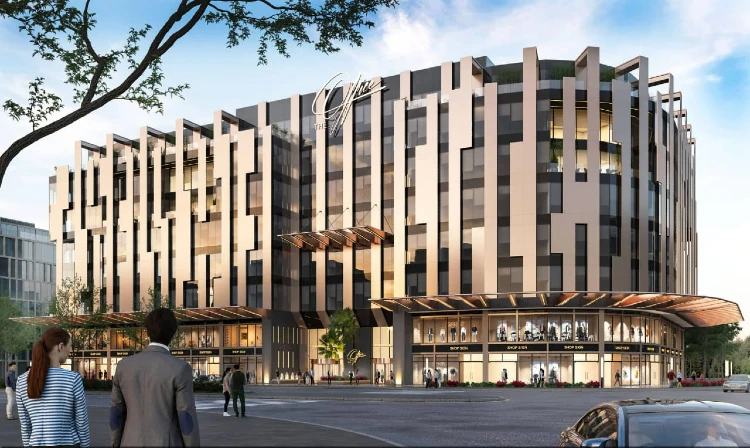
The New Administrative Capital’s Central Business District has moved past the early speculation phase. Ministries are operational, banks have opened branches, and the area now sees daily professional traffic. The Office Mall sits directly in this activity—across from the Ministry of Education, flanked by government buildings on one side and banking headquarters on the other.
IC Group developed this project on 8,200 square meters, spreading commercial units, administrative offices, and medical clinics across eight floors. It’s not trying to be the flashiest building in the district. The pitch is simpler: proximity to decision-makers, foot traffic from government employees, and layouts that work for clinics, offices, and retail.
If you’re weighing whether to put money into a commercial unit here, the fundamentals matter more than the marketing. This guide covers what The Office actually delivers, who benefits most from the location, and where the practical trade-offs sit.
Where The Office Sits and Why That Matters?
Location determines most of what works in commercial real estate, and The Office New Capital has that part sorted. It’s in the Central Business District, directly opposite the Ministry of Education and the Capital Company headquarters. Banks occupy the street to one side, ministries to the other.
That’s not abstract positioning. Government employees, banking staff, and ministry visitors create consistent weekday traffic. The area isn’t residential, so evenings and weekends go quiet—but that’s expected for a business district.
Access is straightforward. The Mohammed bin Zayed Axis is five minutes away, connecting to Suez Road and the Ring Road. New Cairo sits roughly 15 minutes out, depending on traffic patterns. The monorail’s central station is nearby, though service reliability is still settling as the system expands.
The Office benefits from being an early mover in a district that’s now filling in. Projects launched here in 2020 or 2021 carried more uncertainty. Now, with ministries operational and banks open, the surrounding infrastructure is live. That reduces some of the “wait and see” risk that comes with new capital cities.
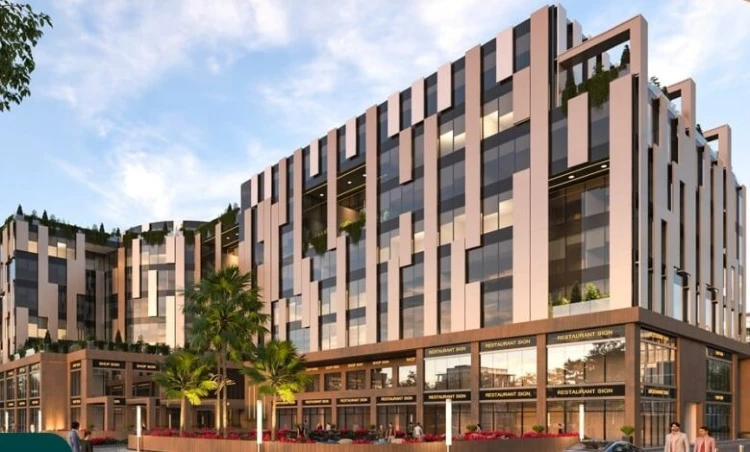
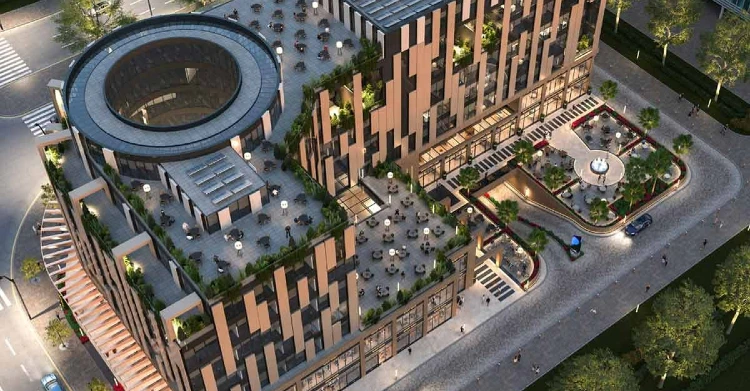
The building has three street frontages—one facing ministries, one toward banks, and one opening to another commercial building. Most units get natural light and external views because of this layout.
What You Can Buy and What It Costs?
The Office New Capital Mall divides into three categories: commercial units, administrative offices, and medical clinics. Each type sits on specific floors, and pricing reflects both floor level and intended use.
Commercial Spaces
Ground and first-floor retail starts at 25 square meters and runs up to 80 square meters. These suit cafes, pharmacies, and service businesses that need walk-in traffic. Ground-floor commercial units start around 130,000 EGP per square meter. First-floor units drop to approximately 90,000 EGP per square meter.
That’s a significant premium for ground-level visibility. It makes sense if your business model depends on impulse customers or street presence. If you’re running a service that clients book ahead—legal work, accounting, specialized medical care—the upper floors offer better value.
Administrative Offices
Floors three through seven house administrative offices. These range from compact 10-square-meter spaces to 115-square-meter suites. Pricing here is more accessible, starting around 35,000 to 40,000 EGP per square meter for unfinished units. Fully finished offices, ready to occupy, start at 640,000 EGP for smaller spaces.
The unfinished option gives you control over layout and finishes, but you’ll need to budget for fit-out costs and manage contractors. Finished units cost more upfront but eliminate that process.
Medical Clinics
The fifth, sixth, and seventh floors in The Office Mall are designated for medical and administrative use. Clinic spaces start at 50 square meters, with some units reaching 60 square meters or larger. Pricing for medical units starts at approximately 180,000 EGP per square meter.
Medical tenants typically need specific layouts—waiting areas, consultation rooms, storage for equipment. The higher per-meter cost reflects both the floor level and the expectation that medical practices generate stronger rental yields, often quoted between 20 and 25 percent annually.
Payment Structure
IC Group offers a structured payment plan for The Office Mall New Capital:
- 10 percent down payment, 5 percent after four months, and the remainder spread over six years.
- That’s 72 monthly installments with no interest explicitly mentioned in available materials, though it’s worth confirming whether any administrative fees apply.
This structure is competitive for the New Capital’s commercial market. Six-year payment terms give you time to secure tenants or establish your business before the bulk of payments come due. The relatively low down payment—15 percent total in the first four months—makes entry more accessible than projects requiring 20 or 25 percent upfront.
Reservation deposits are 20,000 EGP for administrative offices and 50,000 EGP for commercial units. These are standard holding fees while contracts are prepared.
Building Layout and Design
Mall The Office New Capital is built as a ground floor plus seven upper levels, with two basement floors for parking and services. The design is functional rather than architectural statement. Glass facades, central air conditioning, and modern elevators are standard, but don’t expect the kind of design you’d see in a luxury residential tower.
Each floor serves a specific purpose:
- Ground floor: High-visibility retail, cafes, and pharmacies
- Floors 1–2: Commercial units and smaller retail
- Floors 3–4: Administrative offices
- Floors 5–7: Medical clinics and larger administrative suites
Mall The Office New Capital accommodates roughly 270 administrative offices across the upper floors. That density means shared corridors and elevators will see regular use. IC Group has installed multiple elevator banks to manage flow, but during peak hours, expect some wait time.
The three-street frontages mean most units get natural light and external views. That’s a practical advantage—no one wants to work in a windowless office, and clinic patients prefer waiting rooms that don’t feel enclosed.
What’s Included in the Building?
The Office New Capital Mall includes standard commercial building services, though some details remain vague in available materials. Here’s what’s confirmed:
- Central air conditioning throughout the building
- Fire alarm systems and armored entry gates
- Elevators and escalators for vertical circulation
- Dedicated prayer areas on multiple floors
- Separate restrooms for men and women on each level
- High-speed internet infrastructure with cabling to each unit
- 24-hour security and reception services
IC Group has also contracted an international facility management company to handle operations, though the specific company isn’t named in public materials. Professional management matters in commercial buildings—maintenance response times, cleanliness, and tenant communication can make or break the experience.
What’s less clear is the cost of these services. Monthly maintenance fees aren’t specified in available sources, and that’s a gap you’ll want to fill before signing. In similar New Capital projects, maintenance fees for commercial units can range from 15 to 30 EGP per square meter monthly, depending on services included.
Investment Potential and Rental Yields
IC Group projects rental yields between 12 and 15 percent for standard commercial and administrative units, with medical clinics potentially reaching 20 to 25 percent. These are optimistic figures, and actual returns depend on tenant quality, lease terms, and market conditions.
The Central Business District is active, but it’s not saturated with tenants yet. Government employees and banking professionals create demand, but competition from other commercial projects is real. The Office competes with malls like Audaz, Champs Elysees, and Lafayette, all within the same district.
Your edge here is location specificity. Being directly opposite ministries and banks gives The Office an advantage for businesses that need proximity to government clients—legal firms, consulting agencies, specialized medical practices serving officials.
If you’re buying for rental income, focus on lease length and tenant creditworthiness. A three-year lease with a reputable company is far more valuable than a one-year agreement with a startup that might not survive. Build vacancy cushions into your financial model—assume at least one or two months of downtime between tenants.
For owner-operators, the calculation is different. You’re paying installments instead of rent elsewhere, and you’re building equity. That makes sense if you plan to stay in the New Capital long-term and your business benefits from the district’s profile.
Who This Project Actually Suits?
The Office New Capital Mall works best for specific buyer profiles.
- Investors seeking rental income: If you have capital to deploy and want exposure to the New Capital’s growth without managing a residential property, commercial units here offer decent yields in an active district. Focus on the administrative floors (3–7) for better per-meter pricing.
- Medical professionals: Dentists, dermatologists, physiotherapists, and other specialists benefit from the clinic floors. The surrounding government and banking workforce provides a built-in patient base, and the 20–25 percent yield projection reflects the premium medical tenants can charge.
- Business owners in legal, financial, or consulting fields: If your clients are government ministries, banks, or corporate offices in the CBD, proximity matters. Being a five-minute walk from your client’s office is a competitive advantage.
- Retail businesses targeting weekday professionals: Cafes, quick-service restaurants, dry cleaners, and pharmacies will see steady traffic from the office crowd. Weekend and evening business will be lighter, so your model needs to work on weekday volume.
Practical Considerations Worth Noting
No project is perfect, and The Office has trade-offs worth acknowledging.
- Delivery timeline: Original estimates pointed to 2023, but like many New Capital projects, delays have occurred. IC Group hasn’t provided updated completion dates in recent public materials. If you’re buying off-plan, build flexibility into your timeline and don’t rely on specific delivery dates for business planning.
- Market maturity: The Central Business District is active but not fully occupied. Some buildings still have vacant floors, and tenant demand is growing but not explosive. That affects rental negotiations—tenants have options, so expect to compete on price or lease terms.
- Infrastructure dependencies: The New Capital’s broader infrastructure—roads, utilities, public transport—is still expanding. The monorail helps, but car dependency remains high. If your business relies on clients traveling from Cairo or other cities, access convenience matters.
- Maintenance and management: While IC Group has contracted professional management, the quality of that service will only become clear once the building is operational. Poor management can erode property value quickly in commercial real estate.
About IC Group
IC Group was established in 1995 through a partnership of three real estate firms. The company has delivered residential, commercial, and tourism projects across Egypt, including compounds in New Cairo, Shorouk, and Obour, as well as the Gold Market in New Cairo and Cloud 7 Business Mall in the New Capital.
The Office is IC Group’s second project in the New Administrative Capital, following the Dahab Market. The company’s track record is solid but not exceptional—they deliver projects, but they’re not in the top tier of Egyptian developers like Emaar Misr, Sodic, or Palm Hills.
Total investment in The Office is reported at 900 million EGP, with projected sales reaching 1.2 billion EGP. That suggests the company sees strong margins here, which is typical for commercial projects in high-demand districts.
One thing to note: IC Group is planning international expansion, including a project in Florida, USA. That ambition is positive, but it also means management attention may be divided across multiple markets.
Frequently Asked Questions About The Office
What are the actual maintenance fees for units in The Office?
Maintenance fees aren’t specified in publicly available materials from IC Group, which is a common gap in New Capital commercial projects. Based on comparable buildings in the Central Business District, expect monthly fees between 15 and 30 EGP per square meter, covering security, cleaning, elevator maintenance, and shared utilities.
Before signing, request a detailed breakdown of what’s included and whether fees are fixed or subject to annual increases. This cost directly affects your net rental yield, so factor it into investment calculations.
Can foreign investors purchase units in The Office?
Egyptian law allows foreigners to own commercial property, but the process involves additional documentation compared to Egyptian nationals. You’ll need a valid passport, proof of funds, and in some cases, approval from security authorities depending on the property type and location.
IC Group should facilitate this process, but expect longer timelines—often 60 to 90 days for approvals. Working with a local legal advisor who understands foreign ownership regulations helps navigate the bureaucracy efficiently.
How does The Office compare to other malls in the Central Business District?
The Office competes directly with Audaz, Champs Elysees, Lafayette, and Masa malls, all within walking distance. Its main advantage is the three-street frontage and direct positioning opposite ministries and banks. Audaz is closer to the British University, which brings student traffic. Champs Elysees is nearer the Presidential Palace, attracting higher-end businesses.
Lafayette has a larger footprint and includes an artificial lake feature. The Office sits in the middle in terms of pricing and positioning—not the cheapest, not the most premium, but arguably the most central for government-adjacent businesses.
What happens if IC Group delays delivery beyond the promised timeline?
Delays are common in New Capital projects, and contracts typically include clauses limiting developer liability. Review your purchase agreement carefully for penalty clauses—some developers offer compensation (extended payment terms, reduced final payments) for significant delays, but this isn’t guaranteed.
Egyptian real estate law offers limited protection for buyers in off-plan purchases compared to markets like the UAE or UK. If delivery timelines are critical for your business or investment plan, consider purchasing a completed or near-completed unit instead of buying early in construction.
Is it better to buy a finished or unfinished unit?
Finished units cost more per square meter but eliminate fit-out hassles, contractor management, and the risk of cost overruns. You can move in or lease immediately. Unfinished units offer customization and lower initial costs, but you’ll spend 1,000 to 2,000 EGP per square meter on finishing, depending on quality. For investors, finished units start generating rental income faster.
For owner-operators with specific layout needs—especially medical professionals—unfinished units provide flexibility. Calculate the total cost (purchase plus finishing) versus finished unit pricing before deciding.
What’s the resale market like for commercial units in the New Capital?
Resale liquidity in the New Capital’s commercial market is still developing. Most buyers are end-users or long-term investors rather than flippers. If you need to sell before delivery or within the first few years, expect limited buyer pools and potential discounts.
The market favors sellers once buildings are operational, tenants are in place, and rental income is proven. If liquidity matters, focus on smaller, more affordable units (under 2 million EGP) that appeal to individual business owners rather than large corporate buyers. Properties with existing tenants on long leases sell faster and at better prices.
The Office New Capital offers a straightforward commercial investment in a district that’s moved past the speculative phase. The location opposite ministries and banks provides real advantages for the right businesses, and the payment structure makes entry accessible without requiring large upfront capital.
Rental yields in the 12 to 15 percent range are achievable if you secure quality tenants, though medical units on the upper floors may push higher.
The trade-offs are typical for New Capital projects: delivery timelines remain uncertain, the broader market is still maturing, and maintenance details need clarification before purchase. This isn’t a project for buyers expecting quick returns or guaranteed liquidity.
It suits investors with a three-to-five-year horizon, medical professionals planning to establish practices in the capital, or business owners whose clients are concentrated in the government district. If that describes your situation, The Office Mall New Capital deserves serious consideration. If not, other projects in more established areas might serve you better.
Similar Listings

Core The Business Hub New Capital

Iris Mall New Capital | A Practical Look...

Ronza Tower New Capital | What You Need ...