

Description
Commercial real estate in the New Administrative Capital comes down to three things: where it sits, who built it, and whether the numbers work. The Pavilion Mall occupies 13,000 square meters in R7 district—a residential zone near government offices, the Swedish University, and the Business District. El Attal Holding developed it as their second capital project after Park Lane Compound.
You’re looking at commercial shops from 35 square meters, administrative offices from 31 square meters, plus medical clinics and pharmacies. Payment starts at 10% down over six years. The architectural design references London’s Park Lane, but what matters more is the practical setup: road access via the Middle and Regional Ring Roads, separation of retail and office floors, and proximity to residential density that drives foot traffic.
This isn’t about marketing language. It’s about whether the location, developer history, and financial structure align with your commercial objectives.
Developer Background and Track Record
El Attal Holding started operations in 1948. That’s over seventy years in Egyptian construction and development across residential, commercial, and government projects. Their portfolio includes Park Lane Compound in the New Administrative Capital, embassy buildings for Qatar, Bahrain, and Malaysia, plus infrastructure work on Cairo International Stadium and university facilities in Mansoura, Alexandria, and Helwan.
They run subsidiary companies for different construction aspects—Attcon handles building, Spatium manages design and finishing, Josour imports materials. This vertical integration can mean better quality control, though you’ll want to verify their delivery timelines on Park Lane before committing here.
The Pavilion targets investors after commercial or administrative space in a mixed-use environment. It’s not a standalone retail destination. It’s a commercial component within a residential district, which changes foot traffic patterns and customer profiles compared to entertainment-focused malls.
Their other projects include West Leaves Compound in Sheikh Zayed, Bayside Village in Ras Sedr, and various residential towers in Nasr City. The range shows experience across property types, though commercial mall management differs from residential compound operations.
Location Analysis: R7 District Positioning
The Pavilion sits in Residential District R7, plot D2 specifically. This puts it within the residential zone rather than the downtown commercial corridor or tourist areas.
Road connections:
- Middle Ring Road and Regional Ring Road link to broader Cairo
- Suez-Ain Sokhna Road provides eastern access
- Northern Bin Zayed Axis sits nearby
Surrounding anchors:
- Swedish University generates educational traffic
- Government Quarter and Ministries District create weekday professional movement
- Business and Financial District adds office worker population
- Green River Park (the capital’s longest linear park)
- Al-Fattah Al-Aleem Mosque and Christ Cathedral
- Al Masa Hotel
- Exhibition Grounds
- Iconic Tower
The government and business district proximity matters for administrative office tenants. Medical clinics benefit from residential concentration. Retail depends on both residential population and institutional traffic from the university and government offices.
The R7 location works if surrounding residential compounds fill up as planned. Empty residential towers nearby would undermine the foot traffic assumption. Verify current occupancy rates in Park Lane and other R7 residential developments before you commit.
Architectural Approach and Building Specifications
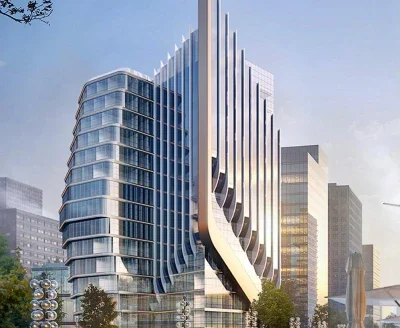
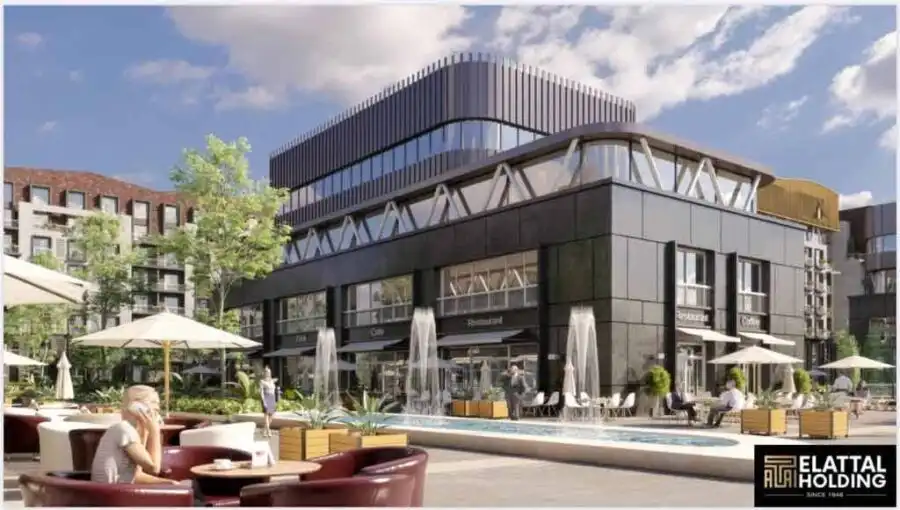
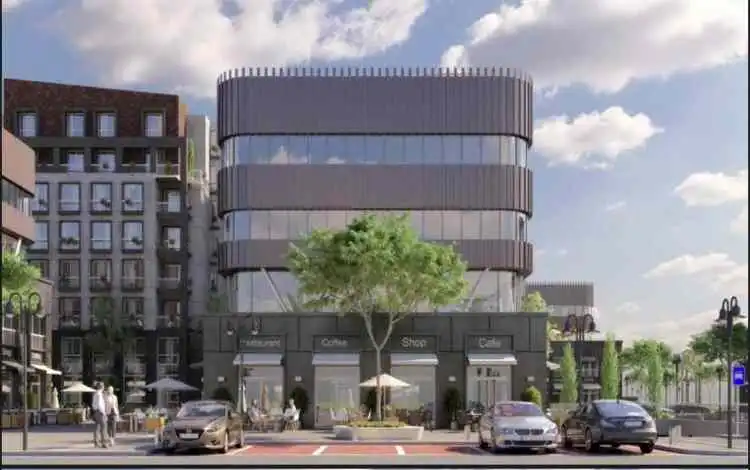
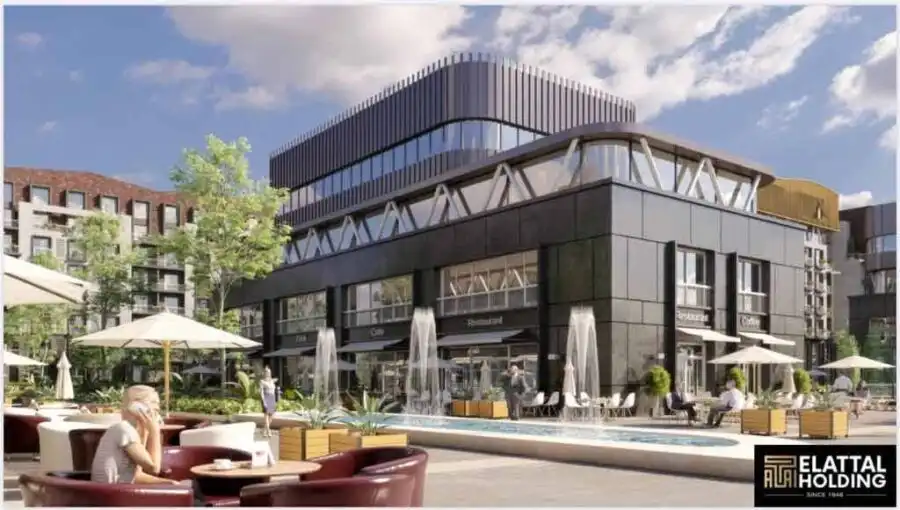
The design of The Pavilion Mall references Park Lane in London, executed through heat-reflective glass facades in green and blue tones. The visual effect creates distinction from standard commercial boxes, though the practical implications matter more.
Glass facades need effective climate control. The mall uses central air conditioning with seasonal adjustment. That’s a maintenance cost consideration for common area fees.
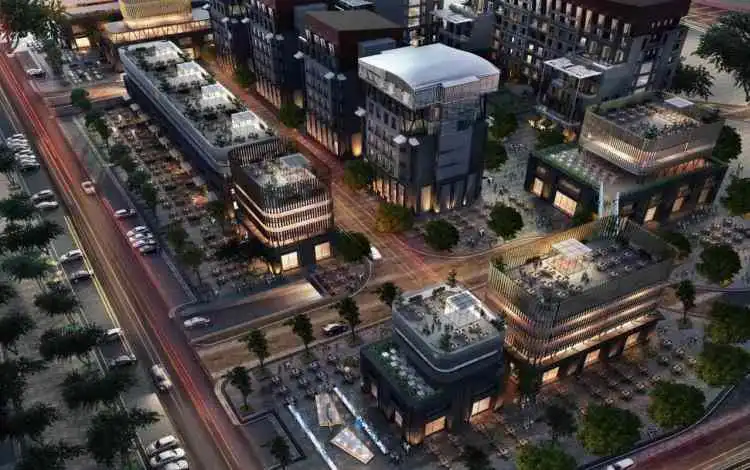
The 13,000-square-meter site of The Pavilion Mall allocates significant space to landscaping and water features, including a Sky Lagoon and outdoor plaza. This reduces building density and creates visual breaks, but also means ongoing maintenance for water features and green areas.
Construction elements:
- Reinforced steel entrance gates
- Fire safety systems throughout
- Solar energy integration for partial power generation
- Surveillance cameras every two square meters
- Multiple entrance and exit points to manage flow
The solar power component aligns with the capital’s sustainability guidelines and potentially reduces operating costs. Fire safety and surveillance address security concerns for commercial tenants.
Escalators and elevators handle vertical circulation. Parking sits in a multi-level garage—verify the ratio of parking spaces to leasable area, as insufficient parking limits customer access regardless of other factors.
Unit Types, Sizes, and Configuration
The Pavilion Mall divides space into four categories:
Commercial units (retail shops):
- 35 to 170 square meters
- Ground and upper floors
- Some units include outdoor space
- Suitable for retail, cafes, service businesses
Administrative offices:
- 31 to 82 square meters
- Separate floors from retail
- Internet infrastructure included
- Designed for professional services, consulting, small business operations
Medical clinics:
- Dedicated medical floors
- Sizes accommodate single practitioners and small group practices
- Residential proximity supports patient base development
Pharmacies:
- Limited availability
- Ground-floor positioning for accessibility
- Standard pharmacy operation sizing with storage
The floor separation between administrative and retail addresses privacy concerns. Medical facilities on separate floors reduce noise and cross-traffic for healthcare providers.
Pricing of The Pavilion New Capital starts around 35,000 EGP per square meter based on earlier listings. Commercial units begin approximately 2,099,000 EGP. Administrative offices start around 1,113,000 EGP. These figures reflect size and location differences within the mall. Confirm current rates directly—prices shift based on construction progress and market conditions.
Payment Structure and Financial Terms
Mall The Pavilion New Capital offers:
- 10% down payment
- Remaining balance over 6 years
- No interest stated in available materials
This extended payment period reduces upfront capital compared to typical commercial purchases requiring 20-30% down. However, clarify several points:
- Are payments equal installments or graduated?
- What are penalties for early payment or default?
- How does delivery timeline align with payment schedule?
- What’s the maintenance fee structure post-delivery?
The low down payment makes entry accessible but commits you to six years of payments before full ownership. Calculate total cost including any fees. Compare against alternative financing if you have access to lower-cost capital.
Operational Infrastructure and Services
The Pavilion Mall provides baseline commercial infrastructure:
Security and maintenance:
- 24-hour security personnel at entry points
- Surveillance camera network
- Dedicated maintenance team for common areas
- Regular cleaning services
Facility features:
- Multi-level parking garage
- Escalators and elevators
- Central air conditioning
- High-speed internet throughout
- ATM machines in multiple locations
Amenity elements:
- Kids area with activities
- Fitness center with equipment
- Spa facilities including sauna and jacuzzi
- Sky Lagoon and water features
- Walking paths through landscaped areas
The amenities in Mall The Pavilion New Capital serve dual purposes: attracting mall visitors and providing services that office tenants and medical practitioners can reference. A fitness center near medical offices creates natural synergy. A kids area supports family-oriented retail and keeps children occupied while parents shop or attend appointments.
Common area maintenance fees in The Pavilion New Capital Mall will cover these services and facilities. Request a detailed breakdown of expected monthly or annual fees. High maintenance costs can erode rental income or increase your operating expenses if you’re running your own business from the unit.
Investment Profile and Tenant Considerations
The Pavilion R7 location within a residential district creates a specific tenant and customer profile:
Strong fit:
- Professional services (legal, accounting, consulting)
- Medical and dental practices
- Pharmacies and health-related retail
- Educational services and tutoring centers
- Cafes and restaurants serving residents and office workers
- Personal services (salons, fitness, wellness)
Moderate fit:
- Specialty retail requiring destination traffic
- Business services (printing, shipping, office supplies)
- Financial services and insurance offices
Weaker fit:
- High-volume retail depending on tourist traffic
- Businesses requiring highway visibility
- Large-format retail needing significant floor space
The residential base provides consistent weekday and weekend traffic. Government and business district proximity adds weekday professional movement. The Swedish University contributes students and faculty during academic terms.
Competition comes from other New Capital malls: Cloud 7 Business Mall, Capital 1, Entrada Avenue Mall, Capital Hub 2, Frontgate Mall. Each serves slightly different segments, but overlap exists in professional services and dining.
The Pavilion’s positioning leans toward professional services and residential-serving retail rather than entertainment or tourism-driven traffic. This creates steadier, less seasonal demand but potentially lower peak volumes.
Practical Limitations and Risk Factors
No project suits every investor. Consider these limitations:
Unit type restrictions:
Only four categories (retail, office, clinic, pharmacy) limit flexibility. No residential units, hotel components, or large event spaces exist within the mall.
Mixed-use dynamics:
Cross-traffic between retail customers, office clients, and medical patients occurs despite floor separation. Shared entrances and parking create interaction points. This matters less for retail but more for medical practices requiring discretion.
Market saturation risk:
The New Administrative Capital continues adding commercial projects. Future supply could pressure rental rates and occupancy if residential population growth doesn’t match commercial development pace.
Delivery and construction risk:
Verify current construction status and realistic delivery timeline. Payment schedules often begin before construction completes. You’re paying for an asset you can’t yet use or lease.
Exit strategy complexity:
Resale markets for commercial real estate move slower than residential. If you need to exit before the six-year payment period ends, finding a buyer willing to assume your payment obligations may prove challenging.
Dependency on surrounding development:
The Pavilion’s success relies on R7 district developing as planned. Delays in surrounding residential projects or infrastructure could reduce foot traffic and tenant demand.
Comparative Context Within New Capital Commercial Market
Understanding where The Pavilion sits relative to other commercial developments helps frame its value proposition.
- Price positioning: At approximately 35,000 EGP per square meter starting price, compare this against current rates in Cloud 7, Entrada, and Frontgate. Adjust for location differences—proximity to government district versus entertainment zones versus residential areas.
- Traffic drivers: The Pavilion relies on residential density and institutional anchors (university, government offices). Entertainment-focused malls depend on weekend and evening traffic. Tourist-oriented developments need visitors from outside the capital. Match your business type to the traffic pattern.
- Amenity approach: Some malls emphasize entertainment (cinemas, bowling, climbing walls). Others focus on shopping (international brands, department stores). The Pavilion leans toward professional services infrastructure (separate office floors, medical facilities, business-friendly layout).
Frequently Asked Questions About The Pavilion
What makes R7 district location work for commercial investment?
R7 sits within a planned residential zone designed for population density, providing a built-in customer base for retail and services. Proximity to the Government Quarter, Business District, and Swedish University creates multiple traffic sources beyond residential alone. Access via the Middle Ring Road and Regional Ring Road connects to broader Cairo without navigating congested downtown areas.
The advantage depends on residential development proceeding as planned. Verify current occupancy rates in surrounding residential compounds. Empty towers nearby undermine the foot traffic assumption.
How does the 10% down payment with six-year installments compare to other financing?
The 10% down payment reduces initial capital requirements compared to typical commercial purchases requiring 20-30% down. The six-year term without stated interest appears favorable, though confirm whether any fees effectively function as interest.
Compare against bank financing if available. Some investors with strong credit access better terms through conventional loans. Consider also that you’re committing to payments before the property generates income. Calculate cash flow including the period between purchase and when you can lease or operate from the unit.
What types of businesses perform best in residential-focused developments like The Pavilion?
Service businesses serving daily and weekly needs typically perform best: medical and dental practices, pharmacies, cafes and casual dining, personal services like salons and fitness, educational services, professional offices (legal, accounting, insurance).
These businesses benefit from proximity to residential populations and repeat customer patterns. Specialty retail requiring destination traffic or tourist-dependent businesses face more challenges unless they build strong regional reputations. The Swedish University and government offices add weekday professional traffic supporting business-focused services and quick-service dining.
What should I verify about El Attal Holding before committing?
Check their delivery timeline on Park Lane Compound. Did units deliver on schedule? Did finishes match promises? Request references from current Park Lane commercial tenants about their experience with maintenance and management.
Verify the financial stability of the company through available public records or industry contacts. Confirm that subsidiary companies (Attcon, Spatium, Josour) are actually handling construction rather than subcontracted to unknown parties. Ask about their property management approach post-delivery: will they manage common areas directly, or hire a third-party management company?
How do I evaluate whether The Pavilion suits my investment goals compared to other New Capital commercial projects?
Start by defining your investment objective: rental income, location for your own business, or capital appreciation for future resale.
For rental income, research current rental rates for similar commercial units in operating New Capital malls. Can those rates support your payment obligations and provide acceptable returns?
For your own business, assess whether the customer profile matches your target market. Does R7 residential and institutional traffic align with your customer base?
For appreciation, consider the development trajectory of R7 versus other districts. Compare The Pavilion’s price per square meter against Cloud 7, Entrada, and other operating commercial projects, adjusting for location differences and amenity variations.
What are realistic timelines for generating income from a Pavilion unit purchase?
This depends on current construction status and intended use.
For your own business, you can begin operating once the unit delivers and you complete custom fit-out—typically 2-4 months post-delivery.
For rental income, add time for finding tenants. In a developing area, this might take 3-6 months or longer depending on market conditions and your rental rate expectations.
During the payment period before delivery, you’re making installments without income generation. Calculate this carrying cost into your total investment analysis. Some investors begin marketing spaces before delivery to reduce vacancy periods, though this requires confidence in delivery timelines.
The Pavilion Mall New Capital presents a commercial investment opportunity grounded in practical fundamentals: established developer with decades of construction experience, residential district location with institutional traffic sources, and accessible payment terms starting at 10% down over six years.
The project’s viability depends less on architectural inspiration or amenity features than on whether R7 district develops as planned, surrounding residential compounds achieve projected occupancy, and commercial supply balances with actual demand.
For investors seeking professional office space, medical facilities, or service-oriented retail in the New Administrative Capital, The Pavilion offers unit sizes and configurations that match these uses. The extended payment terms reduce upfront capital requirements, though this benefit must be weighed against the commitment period and opportunity cost.
Before proceeding in The Pavilion, verify current construction status, confirm all costs beyond the stated unit price, research comparable properties and rental rates, and assess the developer’s track record on delivery and quality. Commercial real estate in a developing area carries different risk profiles than established districts—potential returns may be higher, but so is uncertainty about market absorption and timeline.
The decision rests on your specific situation: available capital, risk tolerance, business needs or investment goals, and confidence in the New Administrative Capital’s continued development trajectory. The Pavilion provides a structured entry point into the capital’s commercial market. Whether that structure aligns with your objectives requires careful analysis of the numbers, location dynamics, and your own business or investment strategy.
Similar Listings
Front Gate New Capital Prices 2026
Pixel Mall New Capital | What You Need t...
Ronza Tower New Capital | What You Need ...