

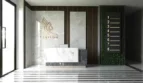




Description
The New Administrative Capital keeps drawing attention from investors looking at Egypt’s commercial real estate market. Senator Mall New Capital sits in this conversation as one of the more accessible projects, particularly if you’re considering administrative or medical space.
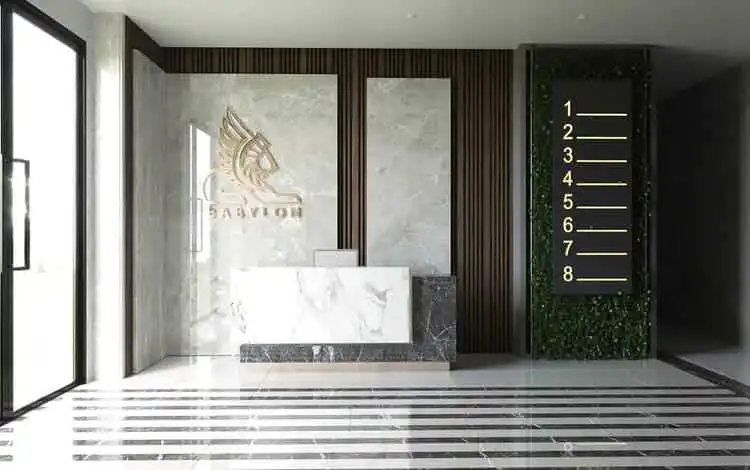
Babylon Urban Development built this project in Downtown’s ADM02 plot. The location puts it near government offices and the Green River Park. Units start at 31 square meters, with entry prices around 3 million Egyptian pounds depending on what you’re looking at.
The payment structure is what gets people interested. Plans stretch up to 14 years with down payments starting at 10%. Some options require no down payment at all. That opens doors for smaller investors or professionals who’d rather own their practice space than keep paying rent.
The project targets doctors, business service providers, and retail operators who need to be in the capital’s administrative center. Whether that positioning actually delivers depends on factors we’ll walk through here.
Where Senator Mall Sits and How You Get There?
Senator Mall occupies plot ADM02 in Downtown, directly across from Parliament and the Government Quarter. That’s not random placement. Administrative centers generate steady weekday traffic from government workers, contractors, and people handling official business.
The building faces an 11-meter road with 94 meters of frontage. Good visibility, though actual foot traffic depends on how quickly the surrounding area fills in.
The mall sits about 5 minutes from the Government District and roughly 10 minutes from Al-Shaab Square and Egypt Mosque. Mohamed Bin Zayed Axis runs nearby, connecting to the Regional Ring Road and eventually Suez-Ain Sokhna Road.
The Monorail station matters here. Exact walking distance wasn’t clear from available information, but proximity to public transport will significantly impact who can reach you as residential areas develop. Right now, most people drive, which makes parking more relevant than it might be in a few years.
New Capital sits about 45 kilometers east of central Cairo. Drive times run 40 minutes to over an hour depending on traffic and where you’re starting from. The government is working on better connections through Monorail and electric train networks, but these aren’t fully operational yet.
What Babylon Built?
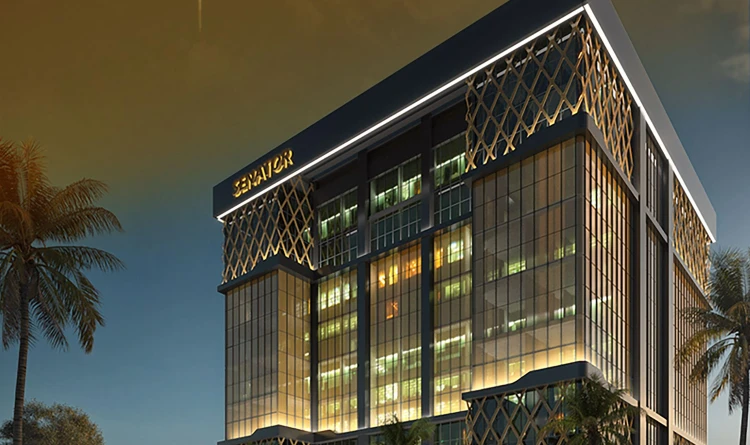
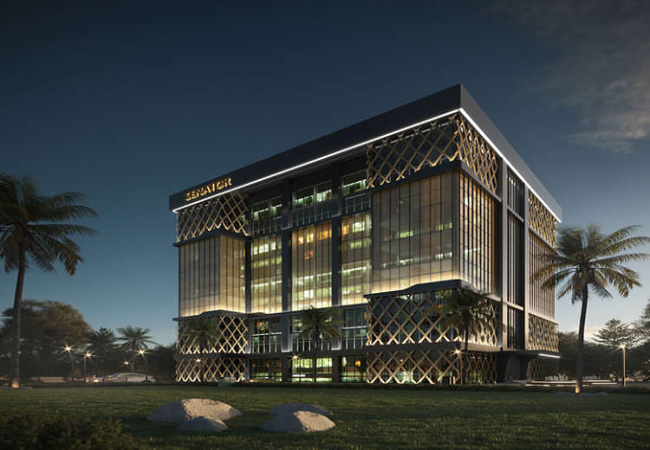
Babylon Urban Development took 2,322 square meters for Senator Mall New Capital. They split it 40% buildings, 60% landscaping and open areas. That’s higher than typical Cairo commercial projects where developers usually maximize built space.
The structure runs from two basement levels through ground floor, eight repeated floors, and a rooftop. About 200 units total, divided between medical, administrative, and commercial uses.
Basements handle parking. Ground floor has reception and a café. Second floor is entirely medical units and clinics. Floors three through ten contain administrative offices. Rooftop reserves space for restaurants and cafés.
This vertical separation by use makes sense. Medical practitioners benefit from consolidated clinic floors where patients can move between specialists easily. Administrative tenants avoid the elevator congestion that medical waiting rooms create.
Glass facades in Senator Mall follow current commercial design trends. Zodiac Company handled interior finishes. Structural consultation came from Dr. Ahmed Fouad Sabry and Abdullah Khalili. These names carry weight in Egyptian development, though actual finish quality matters more than consultant credentials.
Unit Sizes and What They Cost
Senator New Capital offers administrative offices and medical clinics from 31 to 61 square meters. Available sizes include 31, 33, 35, 38, 40, 43, 45, 48, 50, 55, 58, and 61 square meters based on current listings.
These dimensions work for solo practitioners, small partnerships, or satellite offices. A 35-square-meter medical clinic fits a consultation room, small procedure area, and reception desk. A 45-square-meter office handles a team of three to five people with modest meeting space.
The sizes don’t work for larger operations. Multi-specialty clinics or teams of 10+ people need to look elsewhere or consider combining units.
The Pricing Picture
Pricing in Senator Mall starts at 10,250,000 Egyptian pounds in some listings, while others cite 3 million Egyptian pounds as entry level. This likely reflects different unit types, floors, and views rather than conflicting information. Per-square-meter rates reportedly begin around 96,000 Egyptian pounds.
Medical units typically cost more than administrative spaces due to specialized requirements. Plumbing for exam rooms, reinforced flooring for equipment, additional electrical capacity. Corner units and higher floors with Green River Park views also price higher than interior or lower-level spaces.
The developer mentions launch discounts, though specific percentages weren’t detailed in available materials. A 10% maintenance deposit applies across the board.
Payment Plans Explained
Babylon structured ten different payment schedules. All plans use equal installments without interest, which simplifies budgeting compared to bank financing.
The most accessible plan requires zero down payment with full amount spread over four years. This appeals to buyers who prefer keeping capital for fit-out costs and initial operating expenses.
Longer terms require larger down payments:
- 10% down, 6-year installments
- 15% down, 7-year installments
- 20% down, 8-year installments
- 25% down, 9-year installments
- 30% down, 10-year installments
- 35% down, 11-year installments
- 40% down, 12-year installments
- 45% down, 13-year installments
- 50% down, 14-year installments
The 14-year maximum stands out. Most Egyptian developers cap at 7-10 years. This extended timeline drops monthly obligations significantly. On a 3-million-pound unit with 50% down, you’d pay roughly 8,900 pounds monthly over 168 months.
That excludes the maintenance deposit, utilities, and association fees. These weren’t specified but typically add 15-25% to monthly outlay.
Senator Mall New Capital Amenities and Services
- Senator Mall incorporates standard commercial amenities plus features aimed at creating a business community rather than just office space.
- The building runs on smart systems including automated lighting, central air conditioning, and integrated security. Four panoramic elevators service floors, supplemented by escalators and emergency stairs. Generators ensure power continuity, which matters in New Capital where infrastructure is still stabilizing.
- WiFi in Senator Mall coverage extends throughout at no additional cost. Reliability depends on the building’s provider and backup systems—worth verifying before committing.
- Fire suppression installs automatically throughout. Security includes surveillance cameras, monitoring stations, and on-site personnel. Electronic gates control entry points.
- Each floor in Senator Mall contains meeting halls with display screens and sound systems. A dedicated VIP hall serves higher-end client interactions. These shared facilities reduce the need for individual units to allocate space for occasional meetings.
- Co-working areas in Senator Mall aim to foster tenant interaction and provide flexible workspace. The rooftop Sky Lounge offers cafés and restaurants as informal meeting venues.
- Ground-floor retail includes shops, ATMs, and service providers. Banking and basic retail on-site means tenants don’t need to leave the building for routine errands.
- Green spaces, landscaping, water fountains, and artificial lakes occupy 60% of the land. These create a more pleasant environment than typical Cairo commercial properties, though maintenance quality will determine whether they remain assets or become neglected.
- Designated seating areas in Senator Mall New Capital provide outdoor break spaces. Cairo’s climate limits outdoor comfort to morning hours and winter months in practice.
Who Built It and What They’ve Done?
Babylon Urban Development enters New Capital with Senator Mall as a flagship project. They also developed Heritage Mall in the same district, giving them direct experience with local market dynamics.
The firm emphasizes extended payment terms and accessible entry points rather than ultra-premium positioning. This targets Egypt’s growing professional class—doctors opening practices, lawyers establishing firms, consultants needing client-facing space.
Babylon partnered with established names for execution. Deyar Company under Tarek Al-Arabi manages the project. Icon Company handled electrical and mechanical systems. These partnerships distribute risk and bring specialized expertise.
Heritage Mall serves as Babylon’s proof of concept in New Capital. Performance data from that project would provide useful comparison points, though specific occupancy rates and tenant satisfaction metrics weren’t available.
Investment Returns and Realities
Senator New Capital Mall targets investors seeking rental income from medical or administrative tenants, or professionals buying their own practice space.
What Rental Markets Look Like
New Capital’s commercial rental market is still forming. Government employees in nearby ministries create demand for medical services, legal advice, and business consulting. As residential neighborhoods fill, demand should increase.
Current rental rates in similar properties reportedly range from 150-250 Egyptian pounds per square meter monthly. On a 45-square-meter unit, that’s 6,750-11,250 pounds monthly. These rates remain somewhat speculative until the area reaches higher occupancy.
The developer claims potential returns reaching 20% of unit value. This requires scrutiny. On a 3-million-pound investment, 20% annual return means 600,000 pounds yearly or 50,000 pounds monthly—far above realistic rental income. That percentage might refer to cumulative returns over several years or include capital appreciation assumptions.
For medical practitioners or business owners in Senator Mall, purchasing eliminates ongoing lease obligations and builds equity. A doctor paying 15,000 pounds monthly for clinic rent in Nasr City could redirect that toward ownership in Senator Mall with comparable monthly costs once down payment and financing are factored in.
The calculation shifts if your practice is established elsewhere with existing patient relationships. Relocating to New Capital means rebuilding your client base unless patients will travel. For new practices or those specifically targeting government employees, starting in the capital makes more sense.
Competition increases as more commercial projects complete. Senator Mall’s advantages—payment flexibility and reasonable entry pricing—could become less distinctive as supply grows.
Currency risk affects any Egyptian real estate investment. If you earn in Egyptian pounds, inflation erodes purchasing power but also reduces real debt burden. Foreign currency earners face exchange rate exposure.
How Senator Compares to Other Options?
Several commercial developments in Downtown New Capital target similar investors. In View Mall, Darvell Mall, and BN Downtown Mall all sit in the same district with comparable access to government facilities.
In View Mall emphasizes entertainment alongside commercial space, incorporating cinemas and family areas. This mixed-use approach generates evening traffic that purely administrative buildings lack.
Darvell Mall positions slightly more upscale with international brand tenants and higher-end finishes. Entry prices run correspondingly higher.
BN Downtown Mall and East Canyon Mall offer similar administrative and medical configurations to Senator Mall. Comparing payment terms, per-square-meter pricing, and specific locations helps identify best value.
Senator’s distinguishing factors include the 14-year maximum payment term and zero-down-payment option. If financing flexibility matters more than premium positioning, these terms provide clear advantages.
Practical Details Before You Commit
Several factors deserve attention beyond marketing materials and payment plans in Senator Mall.
Projected handover sits at 2025. Construction delays are common in Egyptian real estate, so building buffer time into planning makes sense. If you’re coordinating a practice opening or office launch with handover, have contingency arrangements.
The 10% maintenance deposit was mentioned, but ongoing monthly fees weren’t specified. These cover common area upkeep, security, utilities for shared spaces, and building management. In comparable properties, fees range from 15-30 pounds per square meter monthly.
On a 40-square-meter unit, that’s 600-1,200 pounds monthly in addition to installment payments. Factor these into cash flow projections.
Units in Senator Mall deliver in shell condition requiring full fit-out. Medical clinics need specialized work—exam room equipment, sterilization facilities, waiting areas, accessibility features. Budget 150,000-300,000 pounds for basic medical fit-out depending on specialty.
Administrative offices need flooring, partitions, furniture, IT infrastructure, and signage. Expect 80,000-150,000 pounds for professional office fit-out.
Medical facilities face health ministry inspections and licensing requirements. Administrative offices need commercial registry and tax registration. New Capital’s administrative processes are still standardizing, which can mean longer processing times than established Cairo districts.
Downtown New Capital About Senator Mall
What actually makes Senator Mall different from other commercial projects?
Senator Mall distinguishes itself through payment flexibility rather than premium positioning. The 14-year installment with 10% down makes entry more accessible than projects requiring 30-40% upfront. The zero-down four-year plan is particularly unusual. The project focuses specifically on administrative and medical uses rather than mixing retail and entertainment, creating a more professional environment but potentially less evening activity.
How does distance from Cairo affect investment potential?
The 45-kilometer distance currently requires 40-60 minutes driving, limiting your client base to those already working in the capital or willing to travel. This also means less competition than saturated Cairo markets. As Monorail and electric train networks become operational, accessibility should improve. For medical practitioners, patients generally prefer nearby providers, so your practice would primarily serve New Capital residents and workers rather than drawing from established Cairo neighborhoods.
What are realistic rental income expectations?
Market rates for similar space currently range from 150-250 Egyptian pounds per square meter monthly, though the market is still forming. For a 40-square-meter office, this translates to 6,000-10,000 pounds monthly. Medical clinics can command slightly higher rates due to specialized fit-out. Conservative projections should assume 6-8% annual rental yield initially, potentially increasing as the area matures.
Should I buy as investment or for my own practice?
This depends on your situation. If you’re paying 12,000+ pounds monthly for clinic or office rent in Cairo and your clients can reasonably travel to New Capital, ownership makes financial sense. Monthly installment plus maintenance would be comparable to rent while building equity. However, if you have an established practice with patients who won’t follow you to a new location, the investment becomes riskier. For pure investment, rental yields in New Capital remain unproven compared to established Cairo districts.
Senator Mall New Capital presents a straightforward commercial investment in Egypt’s developing administrative hub. The project’s strengths lie in accessible pricing, flexible payment terms, and proximity to government districts that generate consistent weekday demand.
The 14-year payment options and low down payment requirements remove barriers that exclude smaller investors from New Capital projects. For medical practitioners or business owners planning to establish presence in the capital, the numbers can work favorably compared to ongoing lease obligations.
The investment requires realistic expectations about New Capital’s development timeline and rental market maturity. This isn’t a quick-return opportunity but rather a medium-term position on the capital’s growth trajectory.
The decision depends on your specific situation—available capital, business location needs, risk tolerance, and timeline. If you’re comfortable with New Capital’s uncertainties and can manage the financial commitment, Senator Mall offers a practical entry point.
Visit the site, examine comparable properties, and run conservative financial projections before committing. Real estate decisions work best when based on practical analysis rather than optimistic scenarios.
Similar Listings
Front Gate New Capital Prices 2026
Pixel Mall New Capital | What You Need t...
Ronza Tower New Capital | What You Need ...