Description
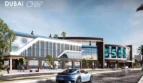
Capital Dubai sits in the R7 district of Egypt’s New Administrative Capital, positioned along the central axis parallel to Mohammed bin Zayed’s southern route. The project covers roughly 3.6 acres and delivers commercial and administrative units across three floors. Dubai Developments, the company behind it, launched this as part of the broader commercial buildout happening across the New Capital.
The location puts it near the diplomatic quarter, government facilities under construction, and several educational institutions. Unit sizes run from 26 to 167 square meters, with payment plans stretching up to seven years. Pricing starts around 7.6 million Egyptian pounds, though exact costs depend on floor level and position.
This review walks through what Capital Dubai New Capital actually provides, who it makes sense for, and how it stacks up against other commercial options in the area.
Where Capital Dubai Sits and How You Get There?
The R7 district represents one of the designated commercial zones in the New Capital’s master plan. Capital Dubai’s spot on the central axis means you can access major roads without cutting through residential areas first.
The project sits roughly three minutes from the Green River development and Al Massa Hotel. The diplomatic quarter lies within short driving distance, same with the government administrative complex. If you’re coming from Cairo, expect about 30 minutes under normal traffic conditions.
The Cathedral and Al-Fattah Al-Aleem Mosque are close by—both major landmarks in the New Capital. The Canadian and British universities occupy nearby plots. Expo City and the Chinatown development fall within a four-minute radius.
This positioning works for businesses targeting government employees, diplomatic staff, or university communities. The concentration of institutional developments nearby suggests you’ll see steady foot traffic once these facilities actually open and operate at capacity.
What the Development Includes?
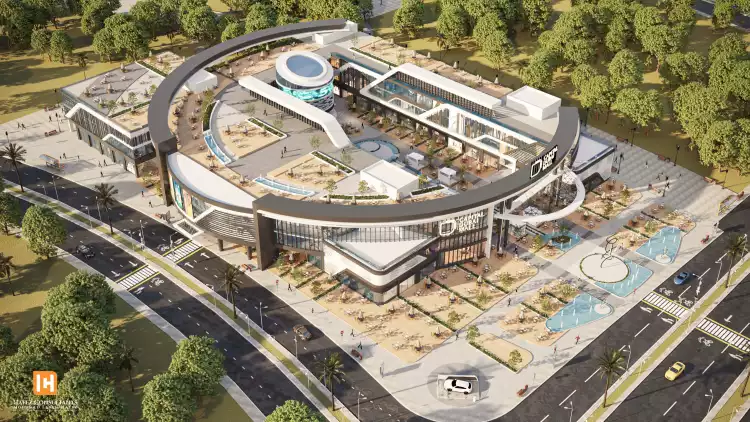
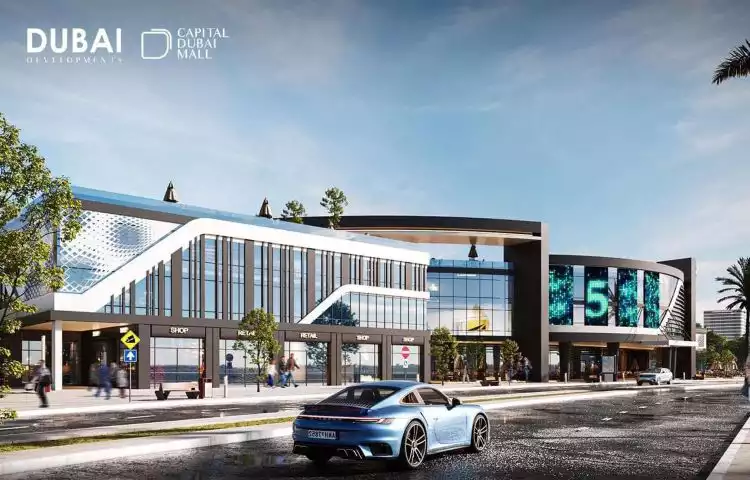
The 13,990-square-meter of Capital Dubai Mall divides into three floors. Ground floor units start at 40 square meters and go up to 138 square meters. First-floor options range from 26 to 109 square meters. Second-floor units span 26 to 167 square meters.
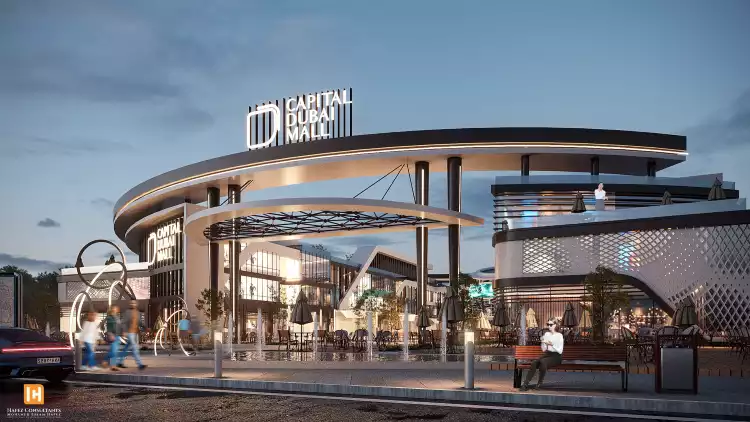
Dubai Developments used glass facades throughout for natural light and thermal insulation. The building includes dedicated loading elevators for moving goods, separate from the customer elevators. Each floor has restroom facilities.
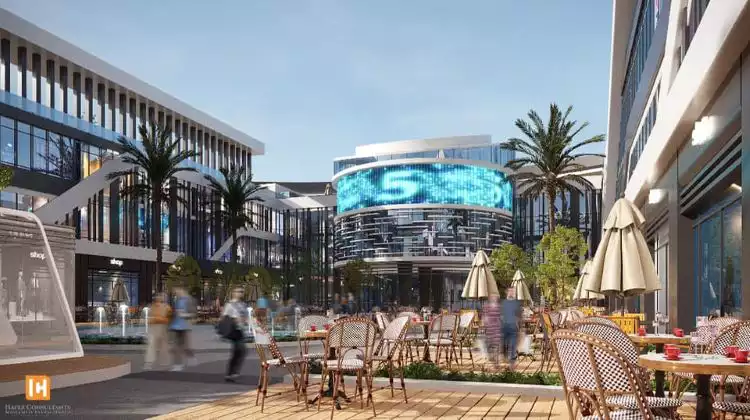
A food court occupies one section, though I don’t have specifics on which restaurants or vendors will occupy it. A rooftop café adds another dining option. Parking facilities spread across designated garage spaces—exact capacity wasn’t specified in available materials.
Security in Capital Dubai Mall includes surveillance cameras throughout the property and on-site personnel. Fire safety covers alarm sensors and firefighting equipment on each floor. The building runs on standard electricity plus solar energy backup, with automatic generators if power cuts out.
Central air conditioning runs throughout. High-speed internet infrastructure comes pre-installed. ATMs are positioned somewhere within the mall.
The three-floor layout creates natural separation. Ground-level retail, mid-level services, upper administrative spaces. This reduces conflicts between different business types sharing the building.
Unit Sizes and What Fits Where
Ground floor in Capital Dubai Mall commercial units suit retail operations that need street-level visibility. The 40-square-meter minimum works for specialty shops. The 138-square-meter maximum fits furniture stores or electronics retailers.
First-floor units, starting at 26 square meters, match professional service businesses—dental clinics, legal offices, consulting firms. The smaller footprint reduces overhead for service providers who don’t need extensive display areas.
Second-floor spaces offer the widest range. Compact 26-square-meter offices work for solo practitioners or small teams. The 167-square-meter suites could house training centers, medical facilities, or corporate offices needing multiple rooms.
All units in Capital Dubai Mall come finished, though exact standards vary. You should verify specifics on flooring, bathroom fixtures, and any kitchen installations before signing anything.
Pricing and Payment Options in Capital Dubai Mall
Unit prices in Capital Dubai New Capital start at approximately 7,661,756 Egyptian pounds. The per-square-meter rate begins around 140,000 EGP and reaches up to 165,000 EGP depending on floor, size, and specific position.
A 10% maintenance fee applies to all purchases, calculated on the total unit value. This covers common area upkeep, security services, and building management.
Three payment plans:
- Plan One: 15% down payment, remainder over five years
- Plan Two: 20% down payment, remainder over six years
- Plan Three: 25% down payment, remainder over seven years
All plans divide the balance into equal installments. I didn’t see interest rates specified anywhere—confirm whether these are interest-free or include financing charges, because that changes your actual cost significantly.
Delivery is scheduled for 18 months from contract signing. Construction timelines in the New Capital have historically run longer than projected, so consider that timeframe provisional.
Compared to established commercial areas in Cairo, the pricing reflects the New Capital’s developing status. You’re trading immediate returns for potential appreciation as the city fills in.
Who This Project Actually Suits?
Capital Dubai Mall New Capital works for specific buyer profiles more than others.
Investors with medium-term horizons can lock in current pricing before the area reaches full occupancy. The seven-year payment plan lets you enter without massive upfront capital, though rental income won’t start until surrounding developments finish and tenants actually move in.
Service professionals planning to relocate practices to the New Capital find appropriately sized units here. Doctors, lawyers, consultants serving government employees or diplomatic communities could establish early presence.
Retail businesses targeting institutional clients benefit from proximity to government complexes and universities. Office supply stores, printing services, business attire retailers fit this profile.
Food and beverage operators in Capital Dubai Mall might consider ground-floor units, though the dedicated food court creates built-in competition. Specialty cafés or quick-service concepts with clear differentiation could work.
This doesn’t suit businesses requiring immediate customer volume. The New Capital’s population remains limited during development. Retailers dependent on high foot traffic should wait for greater residential density or stick with established Cairo areas.
About Dubai Developments
Dubai Developments operates as a subsidiary of a UAE-based parent company, established in 1995. The firm reports completing over 100 projects in Egypt across residential and commercial categories.
Previous work includes Obsidian Tower Mall and Spire Tower in the New Capital, plus Blue Tower in Sheikh Zayed. In the UAE, the company developed Al Murooj commercial complex in Dubai and various residential buildings.
The track record suggests capacity to complete projects, though individual buyer experiences vary. If you’re considering this seriously, research delivery timelines on their previous developments and talk to existing clients when possible.
Dubai Developments offers property management services post-delivery, handling tenant relations and maintenance coordination. This matters if you’re investing but won’t personally manage the unit.
How Capital Dubai Mall Compares to Other New Capital Malls?
Several malls compete for tenants and customers in the New Capital’s commercial districts.
Midtown Condo Mall offers similar commercial-administrative mixes with comparable unit sizes. Pricing runs slightly higher due to earlier launch dates and greater construction progress.
Aventra Mall targets premium brands with larger floor plates and upscale finishes. Per-square-meter costs exceed Capital Dubai Mall by 15-20%, positioning it for different tenant profiles.
Harmony Mall emphasizes entertainment components—cinemas, family entertainment centers—alongside retail. This draws weekend traffic but creates different operating environments than purely commercial projects.
Pixel Mall launched recently with competitive payment terms and similar delivery schedules. Worth comparing directly if you’re evaluating options.
Avalon Mall incorporates cultural elements and local heritage themes in its tenant mix. This attracts specific customer segments but may limit some business types.
Capital Dubai Mall advantage lies in institutional proximity. The disadvantage is shared by all New Capital commercial projects: uncertain absorption rates until residential populations grow substantially.
What to Actually Consider Before Buying
Several factors deserve attention beyond the sales materials in Capital Dubai Mall.
- Delivery timelines: Construction in the New Capital faces supply chain variables and coordination challenges across multiple simultaneous projects. Build buffer time into your business planning.
- Tenant demand: Research which businesses are actually leasing space in completed New Capital malls. Vacancy rates provide reality checks against projections.
- Operating costs: Beyond the 10% maintenance fee, factor in utilities, internet, security deposits, and business licensing. These vary by unit size and business type.
- Resale market: The secondary market for commercial units in the New Capital remains thin. If you need liquidity within five years, this probably doesn’t suit your needs.
- Management quality: Property management directly affects tenant satisfaction and retention. Ask Dubai Developments for references from their existing commercial properties.
- Zoning compliance: Verify that your intended business use aligns with R7 district regulations. Some activities face restrictions in specific zones.
Frequently Asked Questions
How does the payment plan actually work?
You pick from three options based on your down payment preference: 15%, 20%, or 25% upfront. The remaining balance divides into equal installments over five, six, or seven years respectively. The 10% maintenance fee is separate and typically paid upfront or added to the total financed amount. Confirm with Dubai Developments whether installments include interest charges, as this significantly affects total cost.
When will surrounding developments be completed?
The New Capital follows a phased development schedule spanning multiple years. Government buildings and major landmarks are progressing, but residential neighborhoods vary widely in completion status. The diplomatic quarter near Capital Dubai Mall shows active construction, while some residential zones remain early-stage. Expect gradual activation over 3-5 years rather than a single opening date.
Can I modify the unit interior after purchase?
Most developers allow interior modifications within structural limits. You cannot alter load-bearing walls, building facades, or systems affecting other units. Cosmetic changes like flooring, paint, and non-structural partitions typically receive approval. Submit modification plans to building management before starting work.
What happens if I need to sell before the installment period ends?
You can sell during the installment period, but the buyer must either pay the remaining balance or qualify to assume your payment plan. Dubai Developments may charge transfer fees, typically 1-3% of unit value. The resale market for pre-delivery units remains limited, often requiring price discounts to attract buyers.
How does Capital Dubai Mall compare to investing in established Cairo commercial areas?
Established areas like Nasr City or Heliopolis offer immediate tenant demand and proven rental rates, but entry prices run 40-60% higher per square meter. Capital Dubai Mall provides lower entry costs and longer payment terms, but requires patience as the New Capital matures. Established areas suit investors needing current income; the New Capital works for those able to wait for appreciation.
What businesses are actually succeeding in New Capital malls currently?
Service businesses serving government employees and early residents show the most traction—pharmacies, medical clinics, telecommunications stores, quick-service restaurants. Luxury retail and entertainment venues struggle with limited population. Professional services targeting institutional clients find reasonable demand. Businesses dependent on high foot traffic face challenges until residential density increases.
Capital Dubai Mall New Capital presents a straightforward commercial investment in a developing area. The R7 location near government and diplomatic facilities provides logical advantages once these institutions reach full operation. Unit sizes accommodate various business types, and payment plans make entry accessible without large upfront capital.
The project’s success, like all New Capital developments, depends on factors beyond any single developer’s control—population migration rates, government facility activation, infrastructure completion timelines. Approach this with realistic expectations about absorption periods and return timelines.
For investors comfortable with 10-15 year horizons and businesses planning to serve institutional clients, Capital Dubai Mall offers reasonable value at current pricing. Those needing immediate returns or shorter commitment periods will find better fits in Cairo’s established commercial districts. The decision rests on your specific circumstances, risk tolerance, and belief in the New Capital’s long-term trajectory.
Frequently Asked Questions
You pick from three options based on your down payment preference: 15%, 20%, or 25% upfront. The remaining balance divides into equal installments over five, six, or seven years respectively. The 10% maintenance fee is separate and typically paid upfront or added to the total financed amount. Confirm with Dubai Developments whether installments include interest charges, as this significantly affects total cost.
The New Capital follows a phased development schedule spanning multiple years. Government buildings and major landmarks are progressing, but residential neighborhoods vary widely in completion status. The diplomatic quarter near Capital Dubai Mall shows active construction, while some residential zones remain early-stage. Expect gradual activation over 3-5 years rather than a single opening date.
Most developers allow interior modifications within structural limits. You cannot alter load-bearing walls, building facades, or systems affecting other units. Cosmetic changes like flooring, paint, and non-structural partitions typically receive approval. Submit modification plans to building management before starting work.
You can sell during the installment period, but the buyer must either pay the remaining balance or qualify to assume your payment plan. Dubai Developments may charge transfer fees, typically 1-3% of unit value. The resale market for pre-delivery units remains limited, often requiring price discounts to attract buyers.
Established areas like Nasr City or Heliopolis offer immediate tenant demand and proven rental rates, but entry prices run 40-60% higher per square meter. Capital Dubai Mall provides lower entry costs and longer payment terms, but requires patience as the New Capital matures. Established areas suit investors needing current income; the New Capital works for those able to wait for appreciation.
Service businesses serving government employees and early residents show the most traction—pharmacies, medical clinics, telecommunications stores, quick-service restaurants. Luxury retail and entertainment venues struggle with limited population. Professional services targeting institutional clients find reasonable demand. Businesses dependent on high foot traffic face challenges until residential density increases.
Similar Listings

Core The Business Hub New Capital
Pixel Mall New Capital | What You Need t...
Ronza Tower New Capital | What You Need ...